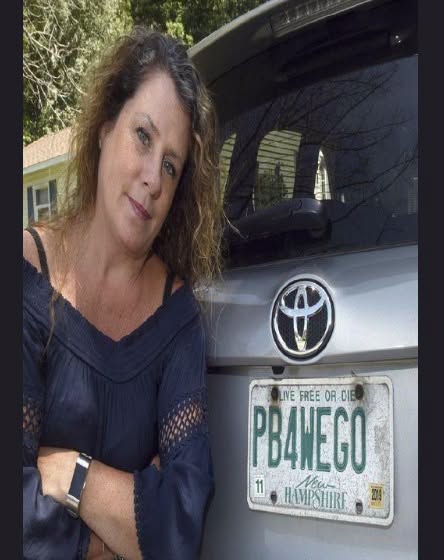
For more than fifteen years, a simple vanity license plate quietly traveled the roads of New Hampshire, bringing smiles to strangers and serving as a humorous reminder of a phrase familiar to parents everywhere.
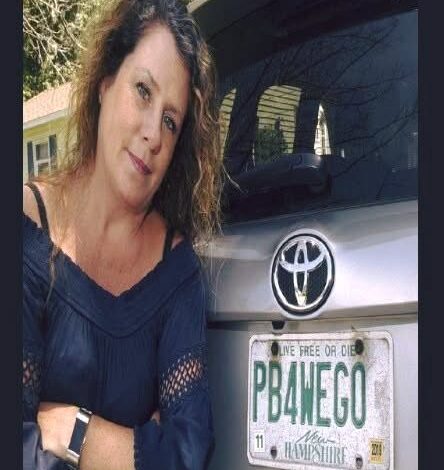
The plate read: PB4WEGO.
To most people, it looked like a random combination of letters and numbers. But to Wendy Auger of Rochester, New Hampshire, it carried a message every parent has probably said countless times before leaving the house:
“Pee before we go.”
What started as a lighthearted joke soon became part of her identity. As a mother of four, Wendy knew all too well the challenges of family road trips, school runs, and last-minute bathroom emergencies. The phrase perfectly captured a universal parenting experience, and over time the license plate became a small source of laughter for friends, neighbors, and even complete strangers who understood the reference.
For years, nobody questioned it.
The plate remained on her vehicle without issue, surviving countless commutes, errands, vacations, and family adventures. It became such a familiar part of Wendy’s daily life that she rarely thought about it anymore.
Then, after more than a decade on the road, everything changed.
One day, Wendy received an unexpected letter from the New Hampshire Division of Motor Vehicles.
The message was straightforward but surprising.
According to the DMV, her personalized plate had been reviewed and was now considered unacceptable under updated standards. Officials argued that the phrase could be interpreted as referencing bodily functions and therefore fell into a category of potentially offensive language.
The letter instructed her to surrender the plate and replace it with another approved combination.
Wendy was stunned.
For over fifteen years, the plate had generated nothing more controversial than a few laughs. Suddenly, the same message that countless parents repeated every day was being labeled inappropriate.
As a paralegal, Wendy carefully reviewed the notice but struggled to understand the reasoning behind it. To her, the phrase was harmless, family-friendly, and instantly recognizable to anyone who had ever traveled with children.
The decision felt especially ironic given New Hampshire’s famous state motto:
“Live Free or Die.”
Rather than quietly giving up the plate, Wendy decided to share the story publicly.
She posted the DMV letter and a photograph of her vehicle online, explaining the situation to friends and followers.
The response was immediate.
People across the country found the situation both amusing and baffling. Thousands of users shared the story, many expressing disbelief that a phrase as innocent as “Pee Before We Go” could suddenly be considered offensive after so many years.
Parents, in particular, rallied behind Wendy.
They recognized the phrase instantly.
Many admitted they had used the exact same words countless times before family outings, vacations, and school trips.
As the story spread, local media picked it up.
Then national outlets followed.
What began as a disagreement over a license plate quickly evolved into a broader conversation about common sense, bureaucracy, and how rules are interpreted.
The growing public attention eventually reached the office of New Hampshire Governor Chris Sununu.
After reviewing the situation, the governor stepped in personally.
In a direct communication with Wendy, he informed her that the matter had been resolved and that she would be allowed to keep her personalized plate.
The decision was welcomed by many who had followed the story.
Soon afterward, Wendy shared the news publicly, expressing relief and gratitude that the issue had been reconsidered.
For her, the outcome wasn’t just about a license plate.
It was about recognizing context, intent, and the difference between harmless humor and genuine offensiveness.
The story quickly became an example of how public feedback can influence administrative decisions. While the issue itself was relatively small, it resonated because it reflected something larger: the importance of applying common sense alongside regulations.
In the end, the familiar plate remained exactly where it had been for years—on the back of Wendy’s vehicle.
And every time another driver reads PB4WEGO, the message remains the same.
A simple reminder.
A parenting joke.
And a small piece of everyday humor that managed to spark a statewide conversation about freedom, interpretation, and common sense.
Sometimes the stories that capture the most attention are not the biggest ones.
Sometimes they’re simply about a mother, a license plate, and four words that parents have been saying for generations: