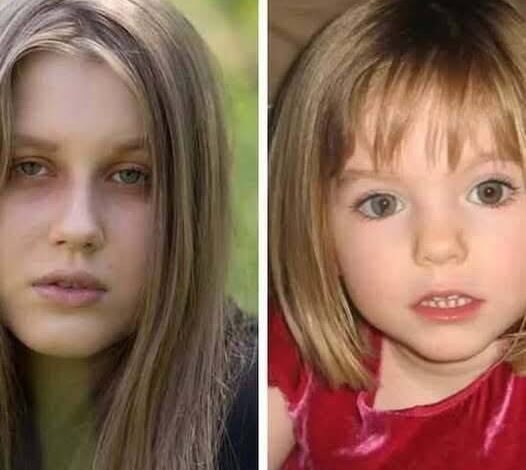
A young woman’s extraordinary claim reignited worldwide interest in one of the most enduring missing-person cases of the modern era: the disappearance of Madeleine McCann.
For nearly two decades, the mystery surrounding Madeleine’s disappearance from a holiday apartment in Portugal in 2007 has remained the subject of international investigations, media coverage, and public attention. Despite years of inquiries and countless leads, definitive answers have remained elusive.
In 2023, the story took an unexpected turn when a 23-year-old Polish woman, Julia Wendell, publicly suggested that she might be Madeleine McCann.
Through social media posts and interviews, Julia shared concerns about her identity, citing childhood memory gaps and perceived similarities in physical features. Her claims quickly gained traction online, attracting millions of views and sparking intense debate across social media platforms and news outlets around the world.
The reaction was deeply divided.
Some people believed her concerns deserved investigation and called for further examination of the claims. Others questioned the evidence and expressed concern about the emotional impact such speculation could have on the McCann family, who have spent years searching for answers about their daughter’s disappearance.
As public interest intensified, Julia appeared in interviews to discuss her belief that unresolved questions about her background warranted further scrutiny. The attention surrounding the case grew rapidly, generating both support and criticism.
Eventually, Julia publicly apologized to the McCann family, acknowledging the distress and controversy her claims had caused.
For many observers, that seemed to mark the end of the story.
However, the situation drew renewed attention when reports emerged suggesting that additional DNA-related analysis had been conducted. According to statements made by Julia and individuals supporting her claims, certain findings were presented as reasons to continue exploring her background and family history.
The reports immediately reignited online speculation.
Supporters argued that any potentially relevant information should be examined carefully, while critics noted that such claims had not been confirmed by official investigators or recognized forensic authorities. They emphasized that unverified results do not establish identity and should not be treated as conclusive evidence.
The controversy became even more complicated because previous reports indicated that Julia was biologically related to the family who raised her and had ancestry consistent with her documented background. Her parents strongly rejected suggestions linking her to the McCann case and maintained that she was their daughter.
Throughout the renewed attention, the McCann family largely avoided engaging publicly with the claims.
Their focus has consistently remained on the official investigation into Madeleine’s disappearance and the search for verifiable answers regarding what happened on the night of May 3, 2007, in Praia da Luz, Portugal.
Experts have repeatedly urged caution when evaluating claims connected to high-profile cases.
DNA evidence, family history, and identity investigations are complex matters that require careful analysis by qualified professionals. Public speculation, social media discussions, and unofficial interpretations can often create confusion when not supported by independently verified findings.
The situation also highlights the growing influence of social media in shaping public conversations around major cases.
Today, a single claim can spread across the globe within hours, generating headlines, debates, and theories long before facts can be fully verified. While online platforms can help raise awareness, they can also blur the distinction between established evidence and unconfirmed allegations.
What remains unchanged is the central mystery that continues to drive public interest.
Madeleine McCann was a three-year-old child who disappeared during a family holiday in Portugal. Despite extensive investigations spanning multiple countries and many years, her fate remains unknown.
Whether Julia Wendell’s claims ultimately prove significant or become another chapter in the long history of theories surrounding the case, the fundamental question remains unanswered:
What happened to Madeleine McCann?
Until clear, independently verified evidence provides a definitive answer, that question will continue to linger.
For now, the case remains one of the most closely followed unsolved mysteries in recent history, and the search for truth continues.