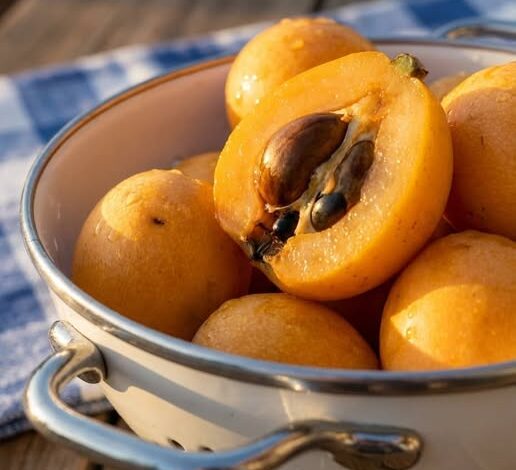
For years, I could remember the taste long before I could remember the name.
It appeared at family gatherings, resting in glass jars lined across kitchen shelves or spread generously onto warm slices of freshly baked bread. Unlike the jams sold in stores, this one tasted different. Its sweetness felt gentle rather than overwhelming, balanced by a bright, natural tartness that lingered long after each bite. The color glowed like liquid amber, and the aroma escaped the jar the moment the lid was lifted.
As a child, I never thought much about where it came from.
It was simply part of life.
There always seemed to be a jar somewhere in the house, and whenever one ran empty, another mysteriously appeared. The recipe moved quietly through the family, passed from one generation to the next. Yet despite enjoying it for years, I rarely heard anyone explain exactly what fruit it came from.
The answer remained hidden in plain sight.
Until one day, curiosity finally got the better of me.
That was when I discovered the fruit was Mishmish.
Apricots.
A cherished variety enjoyed throughout the Middle East, North Africa, the Mediterranean, and many other parts of the world. For generations, families have transformed Mishmish apricots into homemade preserves, creating more than just jam—they’ve preserved memories, traditions, and pieces of cultural heritage.
Learning the name felt strangely emotional.
Suddenly, years of forgotten memories came rushing back. The scent, the flavor, the family gatherings, the comfort of childhood—all of it returned at once. It was a reminder that food has a remarkable ability to carry pieces of our past, waiting quietly until something awakens them again.
What makes traditional Mishmish apricot jam so special is its simplicity.
There are no complicated techniques, artificial flavors, or elaborate ingredients.
The fruit does most of the work.
The process begins with ripe, fragrant apricots. The best ones are slightly soft to the touch, richly colored, and naturally aromatic. Their sweetness and flavor become the foundation of the finished jam.
After washing the fruit thoroughly, the apricots are pitted and cut into pieces. Some people prefer larger chunks for a rustic texture, while others chop them more finely for a smoother spread. Either approach works beautifully.
The prepared fruit is then combined with sugar.
Although simple, this step is essential.
Rather than immediately placing everything on the stove, many traditional recipes allow the fruit and sugar to rest together for thirty minutes or longer. During this time, the sugar slowly draws moisture from the apricots, creating a natural syrup.
This resting period may seem insignificant, but it helps concentrate flavor and creates the rich base that gives homemade jam its distinctive character.
A squeeze of fresh lemon juice follows.
The lemon serves several purposes at once. It brightens the fruit’s natural flavor, balances the sweetness, and provides acidity that helps the jam develop its proper texture. The result is a preserve that tastes vibrant and fresh rather than overly sweet.
Once everything has combined, the mixture is transferred to a pot and cooked over gentle heat.
This is when the transformation begins.
As the apricots soften and release their juices, the kitchen fills with an unmistakable fragrance. Sweet, fruity, and comforting, the aroma drifts through the house and inevitably draws people toward the stove.
Someone always asks the same question:
“Is it ready yet?”
The answer is usually no.
Good jam rewards patience.
The mixture must simmer slowly while excess moisture evaporates and the flavors deepen. Occasional stirring keeps the fruit from sticking while allowing it to cook evenly. Gradually, the bright pieces of apricot soften into a thick, golden preserve.
Experienced jam makers often rely on a simple test to know when the process is complete.
A small spoonful is placed onto a chilled plate.
After a few moments, the surface is gently pushed with a finger. If it wrinkles slightly, the jam has reached the proper consistency. If it remains too runny, it needs more time.
Generations used this method long before kitchen thermometers and modern gadgets became common.
Once ready, the hot jam is carefully poured into sterilized jars and sealed.
The result is far more versatile than many people realize.
Spread over fresh bread, it creates a simple yet unforgettable breakfast. Stirred into yogurt, it adds natural sweetness and bright fruit flavor. It works beautifully in pastries, cakes, and desserts, while some even pair it with cheeses for a balance of sweet and savory.
Yet the true value of Mishmish jam goes beyond how it tastes.
It represents continuity.
In a world built around convenience and speed, traditional recipes remind us that some things are worth slowing down for. They connect generations through familiar techniques, shared experiences, and aromas that instantly transport us back to places we thought we had forgotten.
What began as a search for the name of a childhood flavor became something much more meaningful.
It became a rediscovery of heritage.
A reminder that recipes are not merely instructions. They are vessels that carry stories, memories, and family history across decades.
Today, every spoonful of Mishmish apricot jam still tastes exactly as I remember: sweet, slightly tart, fragrant, and comforting.
The difference is that now I know its name.
I know its story.
And I understand why it remained with me for so many years.
Because sometimes the foods we love become woven into our memories so deeply that they stay there quietly, waiting to be rediscovered.
In the end, a jar of homemade apricot jam holds far more than fruit and sugar.
It holds tradition.
It holds connection.
It holds pieces of the people who made it before us.
And it reminds us that some of life’s most meaningful treasures are often found in the simplest things.