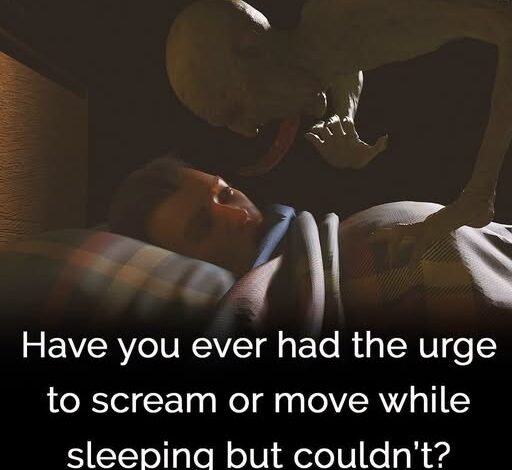
Imagine waking up in the middle of the night, fully aware of your surroundings, only to discover that you cannot move a muscle or call for help. Your mind is awake, but your body refuses to respond. For many people, this terrifying experience feels supernatural or impossible to explain. In reality, it is a well-documented sleep phenomenon known as sleep paralysis.
Although it can feel frightening, sleep paralysis is surprisingly common. Researchers estimate that nearly 30 percent of people will experience at least one episode during their lifetime. Because the experience is so unusual and often difficult to describe, many people never talk about it, leaving them unaware that millions of others have gone through the same thing.
Sleep paralysis typically occurs during the transition between sleep and wakefulness. A person may wake up mentally while their body remains temporarily unable to move or speak. Episodes usually last from a few seconds to a couple of minutes, but they can feel much longer in the moment. Many individuals also report vivid hallucinations, unusual sensations, or the feeling that someone else is present in the room, which can make the experience even more unsettling.
According to sleep specialists, sleep paralysis happens because the brain and body are briefly out of sync. During REM sleep—the stage when most dreaming occurs—the brain naturally prevents the body’s muscles from moving. This protective mechanism keeps people from physically acting out their dreams. Sleep paralysis occurs when awareness returns before that temporary muscle shutdown has fully ended, creating a short period where the mind is awake but the body remains in sleep mode.
Several factors appear to increase the likelihood of experiencing sleep paralysis. High stress levels, anxiety, sleep deprivation, exhaustion, and irregular sleep schedules are among the most commonly reported triggers. People who frequently change their sleeping patterns or struggle with poor sleep quality may be more vulnerable to episodes.
Despite how alarming it feels, sleep paralysis is not considered dangerous. It is classified as a parasomnia, a category of sleep-related experiences that occur during transitions between sleeping and waking states. While the sensation can be intense, it does not cause physical harm and usually resolves on its own within minutes.
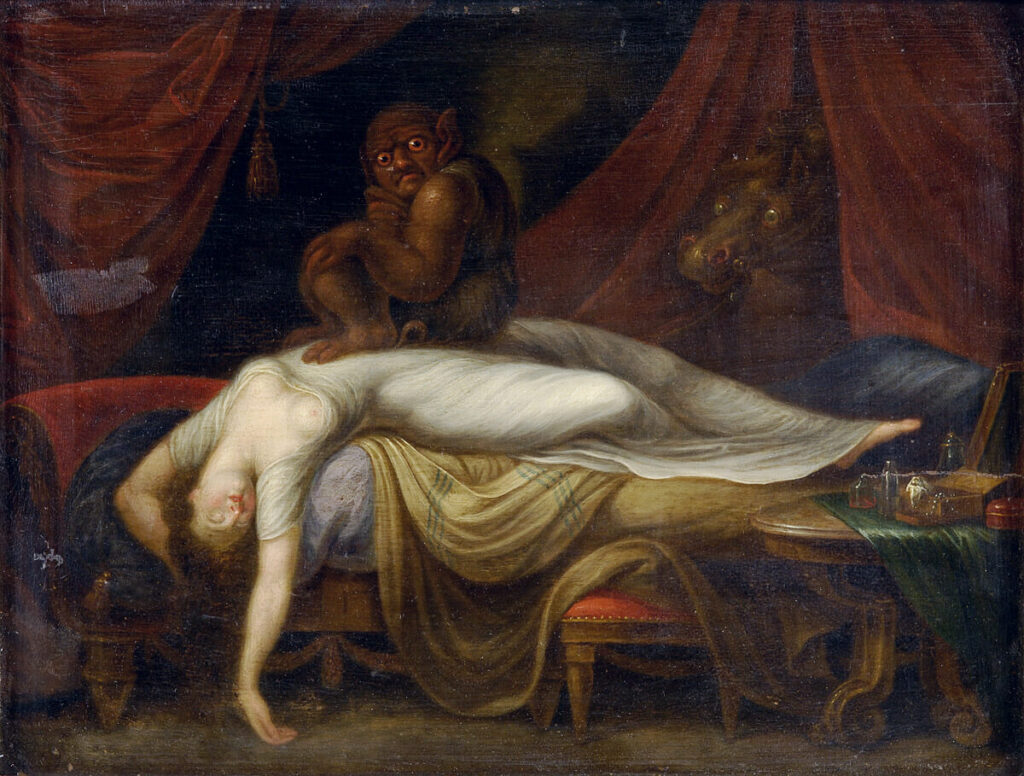
Throughout history, many cultures have developed their own explanations for sleep paralysis. Before modern sleep science existed, people often interpreted the experience through folklore and superstition. In Japan, it has been described as being restrained by an unseen force. In parts of China, it is sometimes referred to as “ghost pressure.” Various African traditions describe the sensation as a supernatural presence sitting on a person’s chest. These cultural interpretations reflect how universal—and mysterious—the experience has felt across generations.
One reason sleep paralysis is so memorable is the vivid hallucinations that can accompany it. Some people report seeing shadowy figures, sensing a presence nearby, hearing voices, or feeling pressure on their chest. Others describe floating sensations or feeling as though they are leaving their body. While these experiences can feel incredibly real, they are believed to be the result of dreaming processes continuing briefly after consciousness returns.
The good news is that there are practical ways to reduce the likelihood of future episodes. Maintaining a consistent sleep schedule, managing stress, avoiding sleep deprivation, and creating a relaxing bedtime routine can all help improve sleep quality. Limiting screen time before bed and ensuring a comfortable sleep environment may also lower the risk.
If an episode does occur, experts recommend focusing on calm, steady breathing rather than fighting the paralysis. Some people find that concentrating on moving a single finger, toe, or facial muscle helps restore movement more quickly. Once a small amount of movement returns, the rest of the body usually follows.
Understanding sleep paralysis can transform it from a terrifying mystery into a manageable sleep phenomenon. While the experience may feel frightening in the moment, it is temporary, explainable, and generally harmless. The more people learn about it, the less alone they feel when it happens.
For those who have experienced sleep paralysis, knowing what is happening can make all the difference. Sometimes, understanding the science behind a frightening experience is the first step toward taking away its power.