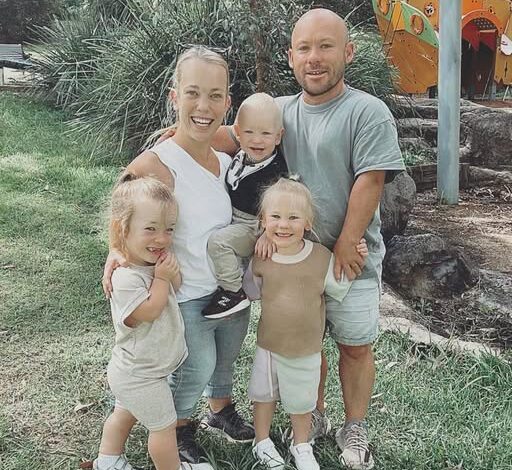
For many married couples, questions about starting a family are common. But for Charli Worgan and her husband, Cullen, the conversations they encountered were often far more personal—and sometimes far more judgmental.
Rather than simply being asked when they planned to have children, the Australian couple frequently found themselves facing questions about whether they should have children at all.
Both Charli and Cullen live with different forms of dwarfism, and their relationship, pregnancies, and family life have attracted significant public attention over the years. While some people have approached their story with genuine curiosity and kindness, others have responded with assumptions, criticism, and opinions about choices that were never theirs to make.
Living in Sydney, Australia, the couple has spent much of their adult lives navigating a world where visible differences often invite unwanted scrutiny. Their decision to build a family together became a topic of discussion for strangers who knew little about their lives, their medical circumstances, or the love that guided their choices.
When Charli became pregnant with their first child, that attention intensified.
Pregnancy is an emotional experience for many expectant parents, filled with excitement, uncertainty, hope, and preparation. For Charli, those emotions were accompanied by the knowledge that many people were watching and forming opinions about deeply personal decisions.
Instead of simply celebrating motherhood, she often found herself explaining her genetic condition, her medical care, and her family’s choices to people who lacked a full understanding of their situation.
After welcoming their first daughter, Charli decided to share her experiences online.
Her goal was not to become famous.
She simply wanted to provide a more honest look at life as a mother with dwarfism and help others understand realities that are often misunderstood.
What started as a personal project gradually grew into something much larger.
Over time, thousands—and eventually hundreds of thousands—of people began following her journey.
Today, Charli has built a substantial social media community where she shares everyday family moments, parenting experiences, personal reflections, and the challenges that come with raising children while living with a visible disability.
Through her openness, she has helped many people see that families come in many different forms and that physical differences do not determine a person’s ability to love, nurture, or parent successfully.
As her family expanded, public interest continued to grow.
Charli has consistently shared both the joys and the challenges of motherhood, particularly when discussing the unique realities surrounding pregnancy and genetics.
When she announced her third pregnancy, she spoke candidly about the emotional complexity involved.
Because both she and Cullen have genetic conditions, each pregnancy carries several possible outcomes. As a result, pregnancy for Charli involves more than routine appointments and countdowns to a due date.
It also includes specialized monitoring, genetic testing, periods of uncertainty, and difficult medical conversations.
One procedure she has discussed publicly is Chorionic Villus Sampling, commonly known as CVS.
The test analyzes genetic material from the placenta and can provide important information early in pregnancy. While medically valuable, it also carries risks and can create significant emotional stress for expectant parents awaiting results.
For Charli, those moments involve balancing hope with uncertainty.
According to her explanations, each pregnancy presents several possible genetic outcomes. A child may inherit average height, inherit Charli’s condition, inherit Cullen’s condition, or, in rare circumstances, inherit both genetic conditions simultaneously.
Medical specialists have explained that inheriting both conditions can result in severe complications that may not be compatible with long-term survival.
Understanding those possibilities means that every pregnancy comes with emotional challenges that many people never have to consider.
For many expectant parents, reaching certain pregnancy milestones brings uncomplicated excitement.
For Charli, those same milestones often involve additional testing, difficult waiting periods, and questions that cannot be answered immediately.
Joy and anxiety frequently exist side by side.
Love is present from the beginning.
So is uncertainty.
Through her willingness to discuss these realities openly, Charli has helped educate her audience about genetics, dwarfism, pregnancy risks, and the emotional experience of navigating medical uncertainty.
Her honesty has resonated with many families facing complex pregnancies or health-related challenges of their own.
It has also helped foster greater understanding about conditions that are often misunderstood.
Alongside support and encouragement, Charli has also faced criticism.
Some people have questioned her decision to have children because of the medical risks involved. Others have made assumptions about disability, quality of life, and parenting without understanding the careful thought, medical guidance, and personal consideration behind her family’s decisions.
In response, Charli has consistently emphasized that these choices are deeply personal and made in consultation with healthcare professionals.
She has also encouraged people to approach conversations about disability, genetics, and parenthood with empathy rather than judgment.
Despite the challenges, Charli and Cullen continue to focus on what matters most: their family.
Their children are growing up in a home built on love, openness, resilience, and support.
Through social media, the family shares everyday moments that many parents can relate to—birthdays, milestones, school events, family outings, challenges, laughter, and the countless small experiences that make up family life.
Their youngest child, a son named Rip, was born in February, and Charli later reflected on the realities of motherhood following his arrival.
She spoke about gratitude, the challenges of parenting, and the understanding that there is no perfect way to raise a family.
Every family faces unique circumstances.
Every parent encounters different obstacles.
Every journey looks different.
Through her platform, Charli Worgan has become an advocate for greater understanding of genetic diversity, disability awareness, motherhood, and family life.
Rather than presenting a flawless version of reality, she shares the full picture—the appointments, the uncertainty, the criticism, the challenges, the victories, and the love that holds everything together.
At its core, the story of Charli and Cullen is about much more than dwarfism or genetics.
It is about resilience.
It is about choosing hope despite uncertainty.
It is about building a family despite criticism.
And it is about showing the world that love, commitment, and good parenting are not defined by appearance or physical differences.
Their journey continues to encourage conversations about acceptance, compassion, and the many different ways families can thrive.
Most importantly, it serves as a reminder that every family deserves the opportunity to define itself—not through the assumptions of strangers, but through the love that exists within it.