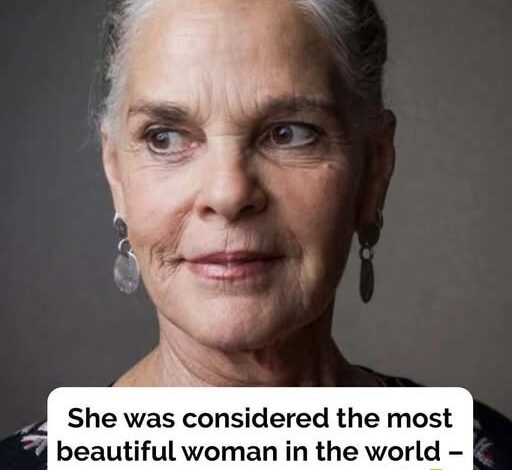
Long before she became one of Hollywood’s most recognizable stars, Ali MacGraw was learning how to survive.
Born Elizabeth Alice MacGraw on April 1, 1939, in Pound Ridge, New York, she grew up in a household filled with creativity but overshadowed by financial hardship and emotional instability. Her mother, Frances, was a talented artist who had once worked in Paris before settling in New York, while her father, Richard MacGraw, was a gifted painter whose difficult childhood left lasting scars.
Richard had spent time in an orphanage before running away as a teenager and eventually studying art in Germany. Although talented, he carried deep emotional wounds throughout his life. Those struggles often shaped the atmosphere inside the family home, creating an environment that could shift unpredictably between warmth and tension.
The MacGraw family lived modestly, often struggling financially. Ali later recalled growing up in cramped conditions with little privacy, sharing living space with others while watching her parents work tirelessly to keep the family afloat. Her mother took on commercial art projects to support the household, while her father’s frustrations with his own career frequently affected family life.
Those early years were far from easy.
Yet they helped shape the resilience that would define Ali throughout her life.
She learned to adapt.
She learned to work hard.
And she learned that strength often comes from enduring circumstances beyond your control.
Education became one of her pathways forward. After earning a scholarship to Rosemary Hall, she later attended Wellesley College in Massachusetts. Intelligent, ambitious, and disciplined, she eventually moved to New York City, determined to build a future of her own.
Her first major opportunity came in publishing.
Ali joined Harper’s Bazaar as an assistant editor under the legendary Diana Vreeland. The fashion world was demanding, fast-paced, and intensely competitive. The experience taught her discipline and sharpened her creative instincts.
Before long, her striking appearance caught the attention of photographer Melvin Sokolsky, who encouraged her to move into styling. The promotion brought greater responsibility and higher pay, allowing her to establish herself within the fashion industry.
Those who worked with her often spoke about her extraordinary dedication.
She arrived early.
She stayed late.
And she approached every opportunity with relentless determination.
Eventually, Ali stepped in front of the camera herself.
Modeling assignments followed.
Magazine covers appeared around the world.
Television commercials expanded her visibility.
She possessed undeniable beauty, but audiences also sensed something deeper—an intelligence, vulnerability, and authenticity that set her apart from many of her contemporaries.
Hollywood quickly took notice.
After a small film role in 1968, she landed the lead in Goodbye, Columbus the following year, earning widespread praise and a Golden Globe Award for Most Promising Newcomer.
But it was her next role that would change everything.
When Ali first read the script for Love Story, she immediately connected with the character of Jenny Cavilleri. Producer Robert Evans believed she was perfect for the part, and audiences soon agreed.
Released in 1970, Love Story became a cultural phenomenon.
Opposite Ryan O’Neal, Ali delivered a performance that captivated audiences around the world. The film became one of the biggest box-office successes of its era, earning her an Academy Award nomination and a Golden Globe Award for Best Actress.
Almost overnight, she became an international star.
At the same time, her personal life appeared equally successful.
She married producer Robert Evans in 1969, and the couple welcomed their son, Josh Evans, in 1971.
From the outside, Ali seemed to have everything—fame, success, admiration, and a growing family.
Yet life soon became far more complicated.
During the production of The Getaway, she met Steve McQueen.
Their attraction was immediate and intense.
Ali later admitted that she was completely captivated by him. Eventually, she left Robert Evans and began a new chapter with McQueen, believing she had found a life far removed from Hollywood’s pressures.
Reality proved more difficult.
Although deeply in love, their marriage was often strained by McQueen’s jealousy, controlling behavior, and personal struggles. Ali later spoke candidly about the challenges she faced, describing a relationship that increasingly limited her independence and personal freedom.
The marriage ended in divorce in 1978.
In the years that followed, both her personal and professional lives became increasingly difficult.
Several films failed commercially.
She struggled with alcohol and substance abuse.
The glamour that once defined her public image could not shield her from personal pain.
Eventually, Ali made a life-changing decision.
In 1986, she entered the Betty Ford Center, determined to confront her addiction and reclaim control of her future.
The experience became a turning point.
For the first time in years, she began rebuilding her life with clarity and purpose.
Another major turning point arrived in 1993 when a wildfire destroyed her California home.
Rather than seeing the loss as an ending, Ali chose to embrace a fresh start.
She left Los Angeles behind and relocated to northern New Mexico, settling in the quiet village of Tesuque near Santa Fe.
There, she discovered something she had spent much of her life searching for:
Peace.
Away from Hollywood, she became known not as a celebrity but as a neighbor, volunteer, advocate, and community member. She devoted time to charitable causes, including support for the International Folk Art Market in Santa Fe, while continuing to explore wellness, creativity, and personal growth.
Although she largely stepped away from acting, she never lost her passion for artistic expression.
She explored yoga, supported animal welfare causes, and occasionally returned to performance projects that genuinely interested her.
Throughout every chapter of her life, one relationship remained especially meaningful: her bond with her son, Josh.
Josh followed the family’s creative path, building a career as both an actor and director. Ali often spoke proudly of him, describing him as one of the greatest joys in her life.
Their close relationship became one of the constants that carried her through decades of change.
Today, Ali MacGraw’s story stands as far more than a tale of fame and Hollywood success.
It is a story of resilience.
A story of reinvention.
A story of a woman who endured childhood hardship, achieved extraordinary success, faced personal struggles, and ultimately found the courage to redefine happiness on her own terms.
She once lived at the center of Hollywood’s spotlight.
But perhaps her greatest achievement was discovering that fulfillment did not depend on remaining there.
By stepping away from the expectations of fame and choosing a life grounded in creativity, family, purpose, and peace, Ali MacGraw created a legacy that extends far beyond any single film.
Her journey reminds us that true success is not always measured by awards, wealth, or public recognition.
Sometimes, it is measured by the courage to change course, heal old wounds, and build a life that feels authentically your own.