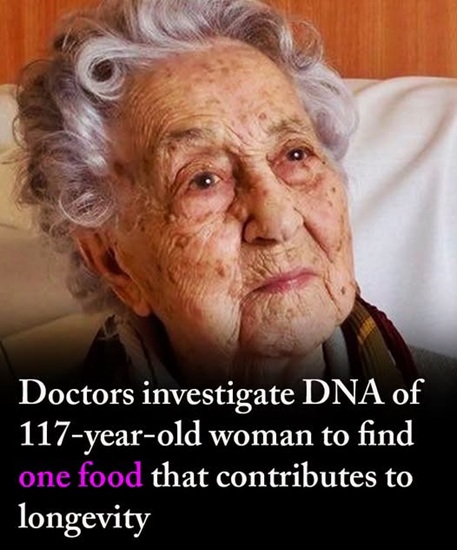
For centuries, people have searched for the secret to a long and healthy life. While science has yet to uncover a formula for immortality, researchers continue to study individuals who live far beyond the average lifespan in hopes of understanding what contributes to exceptional longevity.
Few examples have attracted as much scientific attention as Maria Branyas Morera.
Born on March 4, 1907, Maria lived through more than a century of extraordinary change. Her life spanned world wars, economic upheavals, technological revolutions, and some of the greatest medical advancements in human history. By the time she reached her later years, she had witnessed a transformation of society that few people could even imagine.
Although she was born in San Francisco, her family relocated to Spain in 1915, eventually settling in Catalonia. The journey itself was marked by tragedy when her father died from illness during the voyage. Despite early hardship, Maria built a life defined by resilience, family, and remarkable longevity.

More Than a Century of History
Maria’s life unfolded across one of the most eventful periods in modern history.
She witnessed the rise of automobiles, commercial aviation, television, computers, and the internet. She lived through two world wars, major political transformations, and generations of social change.
By her final years, she had outlived countless historical figures and seen more than a century of progress unfold firsthand.
What made her story especially remarkable was not only her age but also her relatively good health. While aging naturally brought physical limitations, Maria remained mentally engaged and socially connected for much of her life. Her sharp mind and active participation in family life fascinated researchers studying the aging process.
Eventually, she became recognized as one of the oldest verified living people in the world, drawing international attention from both scientists and the media.
A Final Gift to Science
As she approached the end of her life, Maria made a request that reflected her desire to help future generations.
She asked that researchers study her DNA and biological profile after her death in hopes of contributing to a better understanding of human longevity.
Following her wishes, scientists from several Spanish research institutions, including teams affiliated with the University of Barcelona and the Josep Carreras Leukaemia Research Institute, began examining her genetic and biological characteristics.
Their goal was straightforward yet ambitious: understand why some people not only live exceptionally long lives but also maintain relatively good health while doing so.
Maria’s case offered a rare opportunity to study the biology of someone who had reached the remarkable age of 117.

What Researchers Discovered
The findings revealed several intriguing characteristics.
According to scientists involved in the research, some of Maria’s biological markers appeared younger than might be expected for someone of her chronological age. Certain indicators suggested that aspects of her cellular health had aged more slowly than average.
Researchers also observed favorable cardiovascular markers, including healthy cholesterol patterns often associated with reduced risk of age-related disease.
While no single factor could explain her longevity, these findings added valuable pieces to a much larger scientific puzzle.
Lifestyle appeared to play a role as well.
Maria reportedly avoided smoking, consumed little or no alcohol, maintained a consistent daily routine, and remained socially active throughout her life. These habits align with many factors commonly associated with healthy aging in scientific studies.
Her diet also included foods such as yogurt and other fermented products that contain beneficial bacteria. While no individual food guarantees longevity, nutritional patterns that support gut health and reduce inflammation continue to be an area of growing research interest.
The Role of Genetics and Telomeres
One particularly interesting aspect of the research focused on telomeres.
Telomeres are protective structures found at the ends of chromosomes. In general, they tend to shorten as people age, and shorter telomeres are often associated with increased health risks.
However, aging is rarely simple.
Maria’s biological profile demonstrated that the relationship between telomeres and longevity may be more complex than previously believed. Her case challenged some traditional assumptions and highlighted the need for a deeper understanding of how aging works at the cellular level.
Researchers concluded that exceptional longevity is unlikely to result from a single “longevity gene.” Instead, it appears to emerge from a combination of favorable genetics, healthy habits, environmental influences, and perhaps other biological factors that scientists are still working to understand.
A Lifestyle Built on Balance
Beyond genetics, Maria’s daily habits attracted considerable attention.
Family members and reports about her life consistently described her as someone who valued routine, emotional stability, and moderation.
She remained mentally active, maintained strong family relationships, and continued engaging with the world around her even in advanced age.
Scientific research increasingly supports the importance of social connection and emotional well-being as contributors to healthy aging. Loneliness, chronic stress, and social isolation have all been linked to poorer health outcomes, while meaningful relationships appear to support both mental and physical health.
Maria’s life seemed to reflect many of these positive influences.
She often emphasized simplicity, gratitude, and maintaining a calm outlook—qualities that may have helped support her resilience throughout an exceptionally long life.
A Symbol of Resilience
Maria gained additional attention during the COVID-19 pandemic when she became one of the oldest known individuals to recover from the virus.
Her recovery highlighted her remarkable resilience and sparked renewed public interest in her health and longevity.
Throughout her later years, she also shared reflections on aging, family, and society through interviews and social media, often with assistance from relatives. Her messages frequently emphasized dignity, optimism, and the importance of caring for older generations.
These perspectives resonated with people around the world who saw in her story not only extraordinary longevity but also wisdom gained through a lifetime of experience.
What Her Story Teaches Us
Scientists studying Maria Branyas Morera’s life generally agree on one conclusion: longevity is rarely the result of a single factor.
Genes matter.
Lifestyle matters.
Environment matters.
And the interaction between all of these factors appears to shape how people age over time.
While researchers continue searching for answers, Maria’s life offers valuable insights into the complex relationship between biology, behavior, and health.
Her story reminds us that aging is not simply about adding years to life—it is also about preserving health, purpose, and quality of life for as long as possible.
A Legacy Beyond Longevity
Maria Branyas Morera’s legacy extends far beyond the number of years she lived.
At 117 years old, she became more than a remarkable statistic. She became a source of scientific knowledge, inspiration, and hope for researchers striving to better understand the aging process.
Through her willingness to contribute to scientific research, she helped advance the study of longevity and healthy aging in ways that may benefit future generations.
Although many questions about aging remain unanswered, her life continues to provide valuable clues.
Ultimately, Maria’s greatest contribution may not have been the extraordinary length of her life, but the opportunity she gave science to learn from it.
Her story stands as a reminder that every long life contains lessons worth studying—and that the search to understand healthy aging is still unfolding.