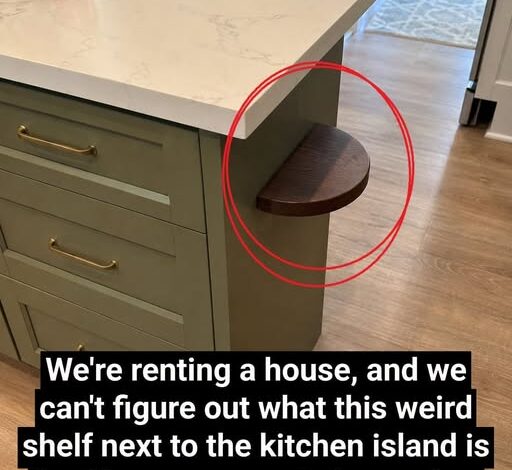
A small shelf built into the side of a kitchen island often leaves people wondering what it is actually meant for. It is too small to serve as seating, too high to function as a step, and separate from the main countertop. While it may seem unusual at first glance, it is a feature with both practical and decorative purposes.
In most kitchens, this type of shelf is designed as a light-duty landing space rather than a work surface or storage area. It provides a convenient place to temporarily set down everyday items without taking up valuable countertop space.
Everyday Uses
A side shelf like this can be surprisingly useful for small items you need within easy reach, including:
- A coffee mug while chatting in the kitchen.
- A phone while cooking or unpacking groceries.
- Keys, sunglasses, or a wallet after coming home.
- A small plant, vase, candle, or decorative bowl.
- A serving plate during gatherings.
- A drink while guests gather around the island.
Think of it as a temporary resting place rather than permanent storage. It is intended for items you’ll use briefly before moving them elsewhere.
A Decorative Design Feature
Many kitchen islands have plain end panels, and designers often incorporate details that make them feel more custom. Some islands include open shelving, wine storage, cookbook niches, or towel bars. Others feature a small stone or marble shelf like this one.
The rounded shape softens the sharp corner of the island while extending the countertop material into the design. As a result, the shelf serves both aesthetic and functional purposes, helping the island feel more refined without adding bulky cabinetry.
Can It Be Used for Serving?
Yes—but only for lighter tasks.
During casual meals or entertaining, the shelf provides a convenient place for a drink, appetizer plate, napkins, or small serving dish without crowding the main workspace.
However, it is not intended to replace a full countertop. Heavy cookware, mixers, stacks of plates, or large serving dishes should remain on the primary work surface.
A simple way to think about it is as a “drink ledge” rather than a food preparation station.
Is It Meant for Storage?
Only in a limited sense.
The shelf can hold a cookbook you’re using, a decorative tray, a small bowl, or a plant. Because it is open and projects slightly into the room, it is not well suited for storing multiple everyday items.
If too many objects accumulate, the area can quickly appear cluttered. Since it sits along the side of the island, anything placed there may also be more likely to get bumped in a busy kitchen.
For the cleanest look, one decorative item or one temporary item at a time works best.
What It Shouldn’t Be Used For
Although the shelf may be made of durable stone, it is not designed to support significant weight. Its strength depends on how it is attached, not just the material itself.
Avoid using it as:
- A seat or place to lean your full body weight.
- A step for children.
- Support for heavy appliances.
- Storage for large serving dishes.
- A place for hot pans directly from the oven or stovetop.
- A spot for fragile objects that could easily be knocked off.
If the shelf feels loose, shifts when touched, or appears to sag, it should be inspected by a cabinet installer or stone fabricator before continued use.
Does the Location Make Sense?
Sometimes these shelves extend into an area where people frequently walk. While they add character to the island, they can also become something people accidentally bump into if the surrounding space is narrow.
That does not necessarily mean the design is flawed. It simply means the shelf is best used for low-profile, lightweight items that do not make the walkway feel crowded.
The Best Way to Use It
The most effective approach is to treat it as a decorative landing space rather than a storage shelf.
A small vase, decorative bowl, attractive tray, or single plant can make the feature feel intentional. During parties, it also works well as a convenient place for a drink or small appetizer plate.
Keeping it simple is the key. One thoughtfully chosen item enhances the design, while several unrelated objects can quickly make the space feel cluttered.
Final Thoughts
That small shelf on the side of a kitchen island is not an accident or an unfinished design. It is a subtle feature intended to provide a convenient place for everyday items while adding visual interest to the island itself.
Whether you use it for a coffee cup, keys, a decorative accent, or a guest’s drink, its value comes from light, occasional use. It may not be an essential feature, but when used thoughtfully, it adds both function and personality to the kitchen.