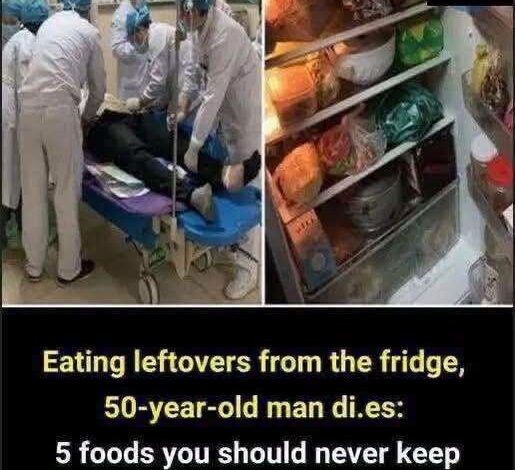
The danger may not be the food itself. In many cases, the real risk comes from what happens after the meal—how leftovers are cooled, stored, handled, and reheated.
Every day, millions of people prepare more food than they can eat in one sitting and save the rest for another meal. It’s convenient, economical, and usually completely safe when basic food-safety practices are followed.
But once cooking is finished, the way food is handled becomes just as important as how it was prepared.
Temperature, cooling time, storage conditions, and reheating methods can all determine whether leftovers remain safe.
Certain foods have developed a reputation for becoming dangerous when reheated, including mushrooms, spinach, and other leafy vegetables. However, the idea that these foods automatically become toxic after being reheated is misleading.
The bigger concern is usually improper storage.
Cooked food should not remain at room temperature for long periods. When food stays warm for too long, bacteria can multiply rapidly, potentially turning an otherwise healthy meal into a food-safety risk.
That means even a perfectly prepared dinner can become unsafe if it sits on the kitchen counter for hours before being refrigerated.
Mushrooms provide a useful example.
Fresh mushrooms can be nutritious and safe to eat when prepared correctly. After cooking, however, they should be cooled and refrigerated promptly rather than being left out for extended periods.
The same principle applies to almost any cooked food.
Getting leftovers into the refrigerator within a reasonable amount of time slows bacterial growth and helps preserve both safety and quality.
Leafy vegetables such as spinach, kale, and bok choy are often surrounded by exaggerated warnings as well.
These vegetables naturally contain nitrates. Their presence does not mean the vegetables are dangerous. Nitrates occur naturally in many foods and are a normal part of the diet.
Simply reheating spinach does not automatically turn it into a harmful food.
What matters much more is how the cooked vegetable was stored.
Vegetable leftovers should be refrigerated promptly and kept cold instead of being left at room temperature for long periods. Repeatedly allowing food to warm up and cool down can create additional opportunities for bacteria to grow.
Reheating also deserves attention.
Leftovers should be heated thoroughly rather than merely warmed on the surface. When reheating a large amount of food, dividing it into smaller portions can help it heat more evenly.
Microwaves can sometimes leave cold spots, so stirring food and allowing it to stand briefly after heating can improve consistency.
Soups, sauces, stews, and other liquid-based dishes should be heated thoroughly, making sure the center reaches an appropriate temperature rather than relying only on how hot the surface feels.
Another common mistake is repeatedly reheating the entire container every time someone wants another serving.
A better habit is to take out only the amount you intend to eat and leave the rest refrigerated.
This minimizes repeated temperature changes and can also help maintain the food’s texture and quality.
Leftovers should not remain in the refrigerator forever, either.
Food can sometimes contain harmful bacteria even when it looks, smells, and tastes completely normal. Your senses are not always reliable indicators of whether something is safe.
That is why refrigerated leftovers should generally be consumed within a reasonable number of days rather than forgotten in the refrigerator for weeks.
If you genuinely cannot remember how long something has been stored, throwing it away is usually the safer choice.
Wasting a portion of food may feel frustrating, but replacing a meal is far less costly than dealing with foodborne illness.
One simple habit can make this much easier: label your containers.
Writing the date on a container takes only a few seconds, but it can prevent the familiar problem of discovering an old container in the back of the refrigerator and having no idea when it was prepared.
Food safety also begins before leftovers are stored.
Wash your hands before handling food.
Use clean utensils and containers.
Keep raw meat separate from cooked foods.
Never place cooked food back onto a plate or surface that previously held raw ingredients unless it has been properly cleaned.
These basic precautions help reduce the risk of cross-contamination.
Cooling is another important part of the process.
Large quantities of hot food can take a long time to cool, particularly when stored in deep pots or large containers. Dividing soups, stews, casseroles, and similar dishes into smaller, shallow containers can help them cool more efficiently before and during refrigeration.
There is also a widespread belief that reheating food several times automatically makes it toxic.
The reality is more complicated.
Repeated reheating can reduce quality and affect texture, while repeatedly moving food between warm and cold temperatures can increase food-safety risks if proper handling is neglected.
But the primary concern is generally bacterial growth caused by poor temperature control—not food suddenly becoming poisonous simply because it was reheated.
That distinction is important.
Fear-based claims can make perfectly nutritious foods appear dangerous when the real issue is how those foods are handled.
Mushrooms, spinach, kale, bok choy, and other vegetables can all be part of a healthy diet.
There is no need to avoid them simply because they are leftovers.
The goal is to handle them safely.
Cook food properly.
Cool leftovers promptly.
Store them in clean containers.
Keep them refrigerated.
Track how long they have been stored.
And reheat only the portion you plan to eat.
These simple habits are far more important than avoiding entire categories of nutritious foods.
People who are pregnant, very young, older, or have weakened immune systems may face a higher risk from foodborne illness and should be especially careful about storage and reheating practices.
If someone develops serious symptoms after eating questionable food—including persistent vomiting or diarrhea, high fever, bloody stools, significant dehydration, or other concerning symptoms—medical advice may be appropriate.
Ultimately, the safest approach to leftovers is not fear.
It is awareness.
Cook carefully.
Cool promptly.
Refrigerate properly.
Keep track of storage time.
Reheat thoroughly.
And when food has been left out too long or you genuinely cannot remember how old it is, don’t take the risk.
Leftovers can be an excellent way to save money, reduce food waste, and make everyday meals more convenient.
They do not need to become a source of anxiety.
In most cases, the real danger isn’t the vegetable sitting on your plate.
It’s forgetting that cooked food still needs proper care long after the meal itself is over.