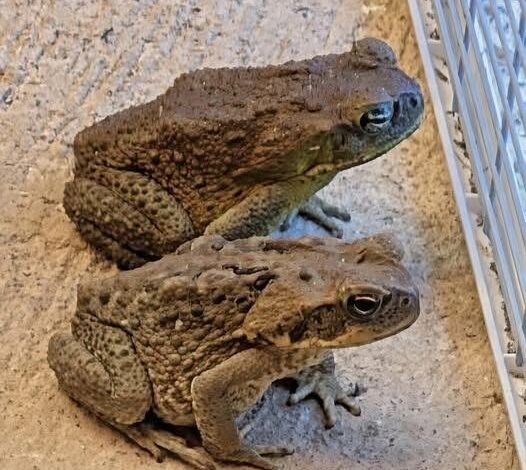
Have you ever stepped outside and noticed a toad sitting quietly near your front door, garden, or porch? For many people, the sight can feel unexpected, even mysterious. Some wonder whether it carries a special meaning or serves as a sign of something unusual. In reality, a toad’s appearance is usually connected to the environment around your home rather than anything supernatural.
Toads are highly sensitive to changes in weather and habitat. They thrive in areas that provide moisture, shelter, moderate temperatures, and an abundant food supply. Because of this, they often become more visible after rainfall, during humid evenings, or in locations where the ground remains cool and damp. Gardens, flowerbeds, shaded corners, mulch, fallen leaves, and small water sources can all create ideal conditions for them.
Even outdoor lighting can play a role.
Porch lights attract insects, and insects attract hungry toads. What may seem like a random visit is often part of a natural cycle taking place right outside your home. As insects gather around lights, toads simply follow an easy source of food.
When a toad chooses to spend time near your house, it is often responding to a favorable microhabitat. Moist soil makes movement easier, vegetation offers protection from predators, and shaded areas provide relief from heat. To the toad, your property is not a human space—it is simply part of a larger ecosystem that happens to provide the resources it needs.
Throughout history, toads have appeared in folklore and cultural traditions around the world. Some cultures associated them with luck, transformation, prosperity, or hidden messages. These beliefs likely developed because toads seemed to appear suddenly after rainstorms or emerge unexpectedly during the night. Modern science, however, offers a more practical explanation. Their movements are influenced by weather patterns, food availability, breeding cycles, and environmental conditions.
Far from being unwelcome visitors, toads often benefit the spaces they inhabit.
They feed on a wide variety of insects, including mosquitoes, flies, beetles, ants, and other common pests. Because of this, many gardeners view them as natural allies. Their presence can help maintain ecological balance without the need for pesticides or other chemical controls.
If you notice the same toad returning repeatedly, it likely means your yard consistently provides what it needs to survive. A reliable combination of shelter, moisture, and food can transform an ordinary backyard into an ideal habitat. In that sense, a toad’s presence may serve as an indicator that your outdoor environment is healthy and supportive of local wildlife.
Rather than seeing them as strange or unwelcome, it can be helpful to view toads as small reminders of how interconnected nature truly is. Rain nourishes the soil. Moisture attracts insects. Insects attract predators like toads. Plants provide cover, and the cycle continues. Even the simplest backyard can become part of a thriving ecosystem.
So the next time you spot a toad near your home, there is usually no reason for concern. It is not a warning, a curse, or a mysterious omen. More often than not, it is simply a small creature responding to the natural conditions around it.
Its appearance is a quiet reminder that nature is always present, adapting and thriving alongside us. Sometimes, a toad at your doorstep is nothing more than a sign that the environment around you is healthy, active, and full of life.