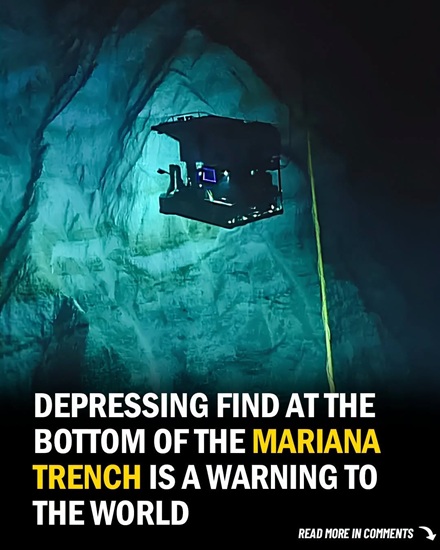
The Mariana Trench, the deepest known location on Earth, has long captured the imagination of scientists and explorers alike. Descending nearly 11 kilometers beneath the surface of the western Pacific Ocean, it is a world of crushing pressure, perpetual darkness, and extreme isolation. For many years, researchers believed such a remote environment remained largely untouched by the everyday consequences of human activity.
That belief has gradually been challenged by a series of remarkable discoveries.
As technology has enabled scientists to explore greater ocean depths, evidence has emerged showing that even the planet’s most inaccessible regions are not beyond humanity’s reach. Among the most striking findings is the presence of human-made waste, including plastic debris, on the floor of the Mariana Trench. What was once considered one of Earth’s last pristine frontiers now serves as a powerful reminder of the global scale of environmental pollution.
Using advanced submersibles and remotely operated vehicles, researchers have documented a variety of discarded materials scattered across deep-sea environments. Plastic bags, food packaging, fishing equipment, and other forms of debris have been found thousands of meters below the surface. These discoveries are not isolated incidents but part of a larger pattern demonstrating how marine pollution has spread throughout the world’s oceans.
The journey of this waste is often surprisingly complex. Ocean currents transport debris across vast distances, carrying materials far from their original source. Over time, many items gradually sink through the water column until they settle on the deepest parts of the seafloor. As a result, pollution generated in densely populated regions can eventually reach locations that appear completely disconnected from human civilization.
Plastic remains one of the most concerning pollutants found in marine ecosystems. Unlike natural materials that break down relatively quickly, plastic can persist for decades or even centuries. Instead of fully decomposing, it gradually fragments into tiny particles known as microplastics. These microscopic pieces have now been detected in virtually every part of the ocean, from coastal waters to deep-sea sediments and even within marine organisms themselves.
Scientists continue to study the long-term consequences of this accumulation, particularly in deep-ocean environments that remain poorly understood. Although these regions may appear barren, they support diverse ecosystems made up of highly specialized species adapted to extreme conditions. Many deep-sea organisms depend on limited food sources and delicate ecological balances, making them especially vulnerable to environmental disruption.
When plastic enters these habitats, it can alter natural processes in several ways. Some animals may mistake plastic fragments for food, leading to ingestion that can affect growth, reproduction, and survival. Debris can also introduce harmful chemicals into the environment and physically alter the seafloor, potentially affecting species that rely on stable habitats.
Another significant concern involves abandoned fishing equipment, often referred to as “ghost gear.” Lost nets, lines, and traps can continue capturing marine life long after they have been discarded. In deep-sea conditions, where cold temperatures and darkness slow degradation, such equipment can remain intact for many years, creating ongoing hazards for marine organisms.
The presence of waste in the Mariana Trench also highlights broader challenges related to global waste management. Much of the pollution entering the ocean originates on land through littering, inadequate disposal systems, and runoff carried by rivers. Once debris reaches the sea, it becomes part of a vast interconnected system that transcends national borders and geographical boundaries.
For this reason, scientists and environmental organizations emphasize the importance of addressing pollution at its source. Efforts to reduce plastic consumption, improve recycling infrastructure, develop sustainable materials, and strengthen waste-management practices are increasingly viewed as essential steps toward protecting marine ecosystems. International cooperation is equally important, as ocean currents transport pollution across regions regardless of political boundaries.
Beyond its environmental implications, the discovery of human-made debris in the deepest part of the ocean carries a profound symbolic message. It demonstrates that human actions can influence ecosystems far removed from everyday life. Decisions made in homes, businesses, and communities can ultimately affect environments thousands of kilometers away, including places few people will ever see firsthand.
These findings also underscore the value of continued ocean exploration. Much of the deep sea remains unexplored, and scientists believe further research is crucial for understanding both the natural world and the extent of humanity’s environmental footprint. Advances in underwater technology continue to reveal new insights about some of Earth’s least understood ecosystems.
Ultimately, the presence of plastic and other waste in the Mariana Trench serves as more than a scientific observation. It is a reminder that no corner of the planet exists entirely beyond human influence. The deepest ocean environments now reflect the consequences of modern consumption, waste production, and global connectivity.
Protecting these ecosystems will require long-term commitment, informed policy decisions, technological innovation, and responsible stewardship of natural resources. The lesson emerging from the depths of the Mariana Trench is both sobering and clear: even the most remote places on Earth are connected to the choices humanity makes every day.
And if the deepest point in the ocean can bear the marks of human activity, then preserving the health of our planet depends on recognizing that every action, no matter how distant it may seem, ultimately reaches far beyond its point of origin.