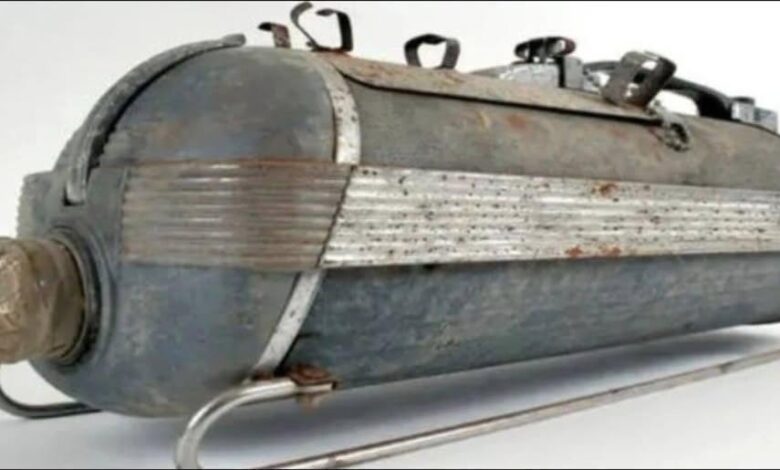
At first glance, it looked more like a machine from an old factory than something that belonged inside a home.
Its heavy metal body was covered with pipes, valves, handles, and mechanical components that seemed far too complicated for an everyday household task. To modern eyes, it appeared mysterious—almost intimidating. People who stumbled across one often guessed it was industrial equipment, a scientific device, or some forgotten invention from a bygone era.
Few realized they were looking at one of the earliest vacuum cleaners.
Long before lightweight cordless models and robotic cleaners became common, keeping a home clean was a far more difficult challenge. During the late nineteenth century, rapidly expanding cities were filled with coal smoke, soot, dust, and pollution from factories and heating systems. Dirt accumulated quickly, and households were constantly searching for better ways to keep their living spaces clean.
Early vacuum cleaners emerged as an innovative solution, but they were anything but convenient.
Some of the first designs relied entirely on manual power. Machines such as the Whirlwind used hand-operated pumps, bellows, and mechanical systems to create suction. Instead of simply pressing a button, users had to generate the airflow themselves, often requiring considerable effort just to collect dust from floors and carpets.
Cleaning was no longer just a chore—it could be a workout.
Operating these machines demanded patience, strength, and persistence. What takes minutes today could consume a significant amount of time and energy, making cleanliness a labor-intensive task for many households.
Everything changed in 1901 when British engineer Hubert Cecil Booth introduced one of the first motorized vacuum cleaners. His invention marked a major breakthrough in household technology, replacing exhausting manual labor with powered suction. Although early motorized models were still large and cumbersome by modern standards, they represented the beginning of a transformation that would eventually bring practical vacuum cleaning into homes around the world.
As technology advanced, vacuum cleaners became smaller, more efficient, and increasingly affordable. What started as a bulky mechanical curiosity gradually evolved into one of the most common household appliances ever created.
Today, a vacuum cleaner is something most people barely think about. We pull it from a closet, press a button, and expect it to work instantly. Yet those simple conveniences are the result of more than a century of innovation, experimentation, and engineering progress.
Looking back at these early machines offers a fascinating reminder of how dramatically everyday life has changed. Objects that now seem ordinary were once revolutionary inventions designed to solve real problems faced by previous generations.
The next time you vacuum a room in just a few minutes, it’s worth remembering that not long ago the same task required a complicated metal machine, a great deal of effort, and a level of determination most modern homeowners will thankfully never need.