The Secret Language of Your Cat: Why That Persistent Head-Butt Might Actually Be a Life-Altering Declaration

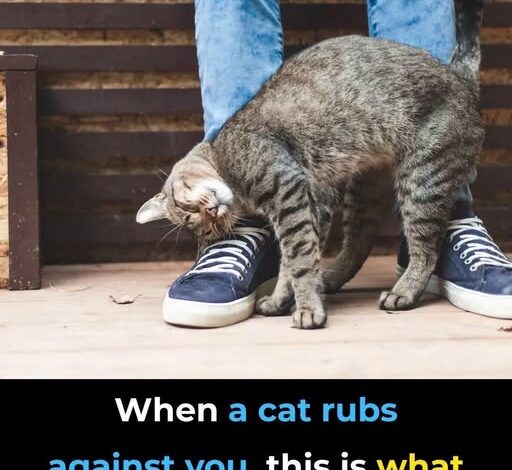
Have you ever wondered why your cat constantly rubs against your legs, brushes its face against your hands, or suddenly presses its forehead against yours? While it may seem like a quirky habit—or simply a clever way to demand food—this behavior is actually one of the clearest signs of trust and affection in the feline world. What looks like a simple bump or weave is often a form of communication that reveals how your cat truly feels about you.
Many people assume cats rub against their owners solely to get attention. While that can certainly be part of the motivation, the behavior runs much deeper. Cats are highly social creatures in their own unique way, and physical contact plays an important role in how they build and maintain relationships. When your cat rubs against you, it is often greeting you, expressing comfort, and reinforcing the bond that exists between the two of you.
One of the most common reasons for this behavior is simple recognition and affection. When you return home, your cat may greet you by winding around your legs or gently head-butting your hand. To humans, it may seem like a request for food or petting. To cats, it is often their version of a warm welcome. In feline social groups, trusted cats frequently greet one another through physical contact, and your cat may be treating you exactly the same way.
There is also a fascinating biological reason behind these interactions.
Cats have scent glands located around their cheeks, forehead, chin, and tail area. These glands release pheromones—natural chemical signals that help cats communicate with their environment. When your cat rubs its face against you, it is leaving behind a familiar scent marker. This process helps create a sense of security and belonging.
In other words, your cat is not just touching you.
It is claiming you as part of its trusted circle.
By placing its scent on you, your cat is identifying you as someone safe, familiar, and important. The behavior is similar to what cats do with other cats they trust. In multi-cat households, this scent-sharing helps create a shared group identity. When your cat marks you with its scent, it is including you in that social group.
Of course, cats are also remarkably intelligent when it comes to getting what they want.
If your cat has learned that rubbing against your legs leads to treats, attention, or playtime, it may use the behavior strategically. Cats quickly recognize patterns, and many become experts at repeating actions that generate positive responses from their humans. A gentle head bump may sometimes be a polite request for dinner, affection, or companionship.
Most of the time, this behavior is completely normal and healthy. However, sudden changes can occasionally signal a problem. If a cat begins rubbing excessively against furniture, walls, or people in a way that seems unusual, it may be worth paying attention. Skin irritation, allergies, ear discomfort, or other medical issues can sometimes cause increased rubbing. If the behavior appears obsessive or is accompanied by other symptoms, a veterinary checkup may be a good idea.
Some cat owners are also familiar with another confusing behavior: the affectionate rub that suddenly turns into a gentle bite.
While surprising, this is usually not aggression. Cats can become overstimulated during petting or play, and a small nip may simply be their way of saying they have reached their limit. Watching body language can help. Tail flicking, flattened ears, or sudden tension often signal that a cat is becoming overstimulated and needs a break.
At its core, your cat’s rubbing behavior is a powerful sign of trust.
Cats do not share their scent with everyone. They reserve these rituals for individuals they consider safe and important. Every time your cat brushes against your legs, nudges your hand, or gently bumps its head against you, it is expressing a connection built on comfort, familiarity, and affection.
So the next time your cat nearly trips you while weaving through your ankles, try to see it differently. What may seem like an inconvenience is actually a quiet compliment. In your cat’s eyes, you are not simply the person who fills the food bowl—you are part of its family, a trusted presence in its world, and someone it genuinely wants close.
For a cat, there are few greater signs of affection than that.