The knife slices through the watermelon, the rind parts cleanly, and then comes the surprise.
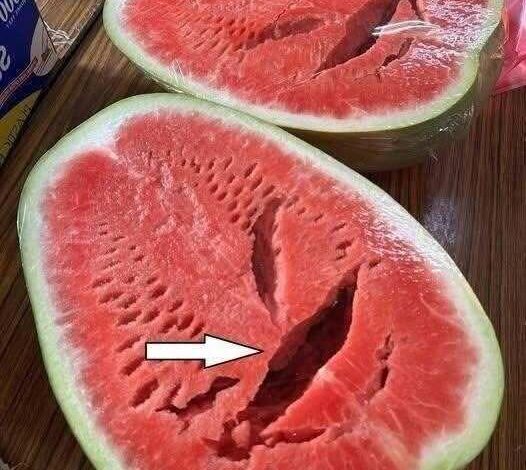
Instead of the smooth, vibrant red interior you expected, you find cracks, hollow spaces, or strange patterns running through the flesh. For a moment, it can be unsettling. Questions immediately come to mind. Was it treated with chemicals? Is it contaminated? Is it still safe to eat?
In an age where alarming claims spread rapidly online, many people assume the worst. But the reality is usually much simpler.
Most internal cracks and hollow sections in a watermelon are not signs of chemicals or dangerous contamination. They are natural growth defects caused by environmental conditions during the fruit’s development.
Watermelons grow quickly, and their growth depends heavily on weather and moisture levels. When a period of dry conditions is followed by heavy rainfall or sudden irrigation, the fruit can absorb water faster than its internal structure can adjust. As the flesh expands rapidly, small cavities, splits, or hollow areas may form inside the melon.
Farmers have observed this phenomenon for generations. Long before modern agricultural debates existed, growers were familiar with what is often called “hollow heart,” a condition that occurs when growth becomes uneven during the fruit’s development.
Temperature fluctuations can contribute as well. Sudden swings between hot and cool conditions may stress the plant and affect how the fruit develops internally. The result can be unusual patterns, cracks, or empty spaces that look dramatic when the melon is cut open.
Because these imperfections appear unexpectedly, they often become the subject of online rumors. Images of cracked watermelons frequently circulate on social media accompanied by warnings about pesticides, growth hormones, or genetic modification. Yet agricultural experts consistently point to natural growing conditions as the most common explanation.
The appearance may not be ideal, but appearance alone does not determine whether a watermelon is safe to eat.
What matters most is freshness.
A healthy watermelon should have a clean, mildly sweet aroma. The flesh should remain firm, juicy, and brightly colored. If the fruit smells sour, fermented, or unpleasant, that is a stronger indication that spoilage may be present.
Texture is another important clue. Spoiled watermelon often becomes slimy, mushy, or excessively watery in an unappealing way. Mold, dark discoloration, or unusual odors are warning signs that should not be ignored.
In contrast, a watermelon with harmless growth cracks can still taste perfectly sweet and refreshing. The cavities may look unusual, but the fruit itself is often completely edible.
Many agricultural specialists view these internal cracks as a quality issue rather than a safety issue. Grocery stores may reject heavily cracked melons because consumers prefer perfect-looking produce, not because the fruit poses a health risk.
That distinction is important.
Modern consumers have become accustomed to fruits and vegetables that appear flawless. Yet nature rarely produces perfection. Weather, soil conditions, rainfall, and temperature all leave their mark on crops. Sometimes those marks appear as unusual shapes. Other times they appear as cracks, cavities, or unexpected patterns hidden beneath the rind.
In many ways, these imperfections tell the story of the growing season itself.
A cracked watermelon may reveal periods of drought, sudden storms, fluctuating temperatures, or other environmental stresses the plant experienced while growing. What looks alarming at first glance is often simply nature’s signature.
So if you cut open a watermelon and discover strange lines, hollow pockets, or internal cracks, take a closer look before assuming the worst.
Check the smell.
Examine the texture.
Look for signs of freshness rather than relying on internet rumors.
In most cases, those unusual patterns are not evidence of chemicals, contamination, or anything dangerous. They are simply the result of a fruit responding to the unpredictable forces of weather, water, and time.
Sometimes what appears to be a warning is really just a reminder that food comes from nature—and nature has never been perfectly uniform.