Buying fresh fruit can sometimes feel like a guessing game. One minute you’re standing in the produce aisle, convinced you’ve picked the perfect watermelon, peach, or pineapple. The next, you’re back home discovering that the fruit isn’t nearly as good as it looked. A beautiful peach turns out dry and flavorless, strawberries begin molding beneath the top layer, and that promising pineapple tastes more like cardboard than tropical sweetness.
For families, the disappointment can be even worse. After finally convincing a child to eat fruit, all it takes is one sour plum or bland melon to make them swear off it for weeks. That’s why many shoppers rely on small tricks and observations that can help improve the odds of choosing better produce.
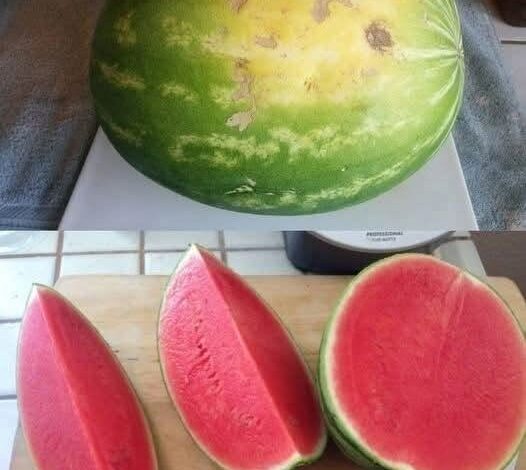
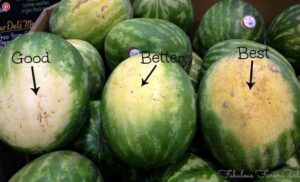
When it comes to watermelons, one of the first things experienced shoppers look for is the field spot. This is the pale patch found on one side of the melon where it rested on the ground while growing. While some people mistake it for a flaw, it’s actually a useful clue. A rich, creamy yellow field spot often indicates that the watermelon spent enough time ripening in the field. A very pale or nearly white spot may suggest it was picked before reaching peak ripeness.
Another feature worth noticing is the brown web-like pattern that sometimes appears on the surface of the melon. These rough markings are often associated with pollination activity during the fruit’s development. Many watermelon enthusiasts believe that more webbing can be a sign of a sweeter melon, as strong pollination may contribute to better fruit development.
Shape is another detail some shoppers consider. While watermelons don’t actually have genders, a popular piece of produce folklore suggests that rounder melons tend to be sweeter, while longer, more oval-shaped melons may contain more water and slightly less concentrated flavor. Whether or not the theory is scientifically proven, many longtime fruit buyers continue to use it as part of their selection process.
One of the most practical indicators is the stem. If the stem is still green and fresh-looking, the watermelon may have been harvested before it had fully matured. A dry, brown stem often suggests the fruit remained on the vine longer and had more time to develop its flavor naturally before being picked.
Ultimately, choosing a great watermelon isn’t about finding the biggest or shiniest one in the pile. Instead, look for a creamy yellow field spot, a dry stem, healthy-looking webbing, and a solid, heavy feel for its size. While no method guarantees perfection every time, paying attention to these details can help increase your chances of bringing home a sweet, juicy watermelon that tastes as good as it looks.