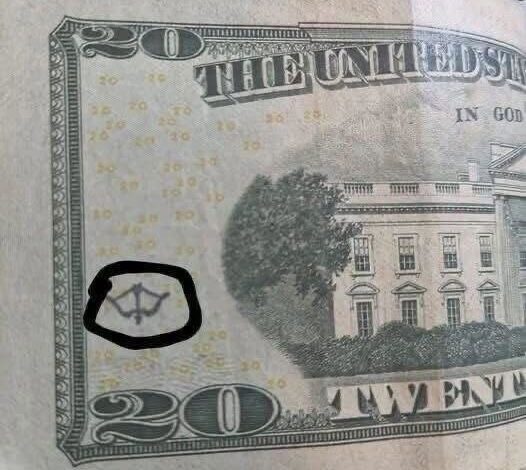
Most people handle cash without paying much attention to anything beyond the denomination printed on the bill. We use it to make purchases, tuck it into our wallets, or place it in cash registers without a second thought. But every now and then, someone notices a small stamp, symbol, or unusual marking on a banknote and wonders if it means something important.
At first glance, these marks can seem mysterious. They may appear as tiny stars, arrows, circles, initials, or unfamiliar symbols that look out of place on official currency. Some people assume they are signs of damage, hidden messages, or even evidence of counterfeiting. In reality, many of these markings have a far more practical explanation rooted in centuries of global trade and commerce.
Long before modern banking systems and sophisticated security features existed, merchants needed reliable ways to determine whether coins and precious metals were genuine. In ancient trading networks, particularly throughout Asia and other major commercial centers, counterfeit currency posed a serious problem. To protect themselves, traders developed a simple but effective system of verification.
After examining a coin and confirming its authenticity, a merchant would stamp it with a personal seal or unique mark. This acted as a public endorsement, signaling to future traders that the coin had already been inspected and approved. Over time, a single coin might accumulate several stamps from different merchants. Rather than reducing its value, these marks often increased confidence because they showed that multiple trusted individuals had verified the coin’s legitimacy.
As economies evolved and paper currency became more common, the practice adapted. Instead of stamping metal coins, some merchants, money changers, and exchange houses began placing small inked marks on paper notes they had inspected and accepted. These markings served the same purpose as the older coin stamps: they signaled trust and authenticity within local trading networks.
The practice became especially common in regions where foreign currencies circulated frequently. During the nineteenth and twentieth centuries, the U.S. dollar became one of the world’s most widely accepted currencies. American banknotes traveled across continents, passing through countless markets, businesses, and exchange offices. Along the way, some bills received verification stamps from merchants who handled them.
Many of the unusual symbols people notice today are remnants of this tradition. A small stamp, character, or geometric design often identifies a particular merchant, money changer, or business that previously examined the note. These marks are generally not secret codes or mysterious messages. They function much like signatures, representing trust and approval within a commercial system.
Even in the modern era, similar practices can still be found in certain regions where cash remains heavily used. Although advanced security features and electronic verification methods now help combat counterfeiting, some businesses continue to use visual markings as a quick way to identify notes they have already inspected.
One common misconception is that marked bills automatically lose value. In most cases, a small stamp or verification mark does not affect a banknote’s legal tender status. The bill typically remains valid for everyday transactions. While excessive damage may impact a note’s condition, minor markings are generally accepted as part of normal circulation.
Interestingly, these stamps can make a bill more appealing to collectors. Currency enthusiasts often view such markings as evidence of a note’s journey through different countries, markets, and hands. Each symbol can represent a stop along the bill’s path, offering clues about its history and the people who once relied on it for trade.
Beyond their practical purpose, these marks tell a larger story about commerce itself. Long before digital payments, banking apps, and international financial networks, merchants built trust through reputation and personal verification. A simple stamp on a coin or bill could provide reassurance that someone else had already confirmed its authenticity.
In many ways, these markings represent an early form of decentralized trust. Rather than relying on a single institution, traders relied on the reputations of individuals and businesses within their communities. The system was simple, but it helped facilitate trade across regions and cultures for generations.
What makes these symbols so fascinating is that they transform ordinary money into historical artifacts. A banknote may seem like nothing more than a piece of paper, but it can travel thousands of miles, pass through countless transactions, and connect people from different backgrounds and countries. Every stamp, fold, and crease becomes part of that story.
The next time you come across a bill with an unusual mark, take a closer look. What appears to be a random symbol may actually be a small piece of economic history—a reminder of how people built trust, conducted business, and connected with one another long before the modern financial world existed.
In a time when more transactions happen digitally than ever before, these markings offer a glimpse into a fascinating tradition that helped shape global commerce. A tiny symbol on a banknote may seem insignificant, but behind it lies a story of trade, trust, and human connection that stretches across generations and continents.