Exploring Youth Sentencing: Understanding the Complexities of Justice and Adolescent Decision-Making

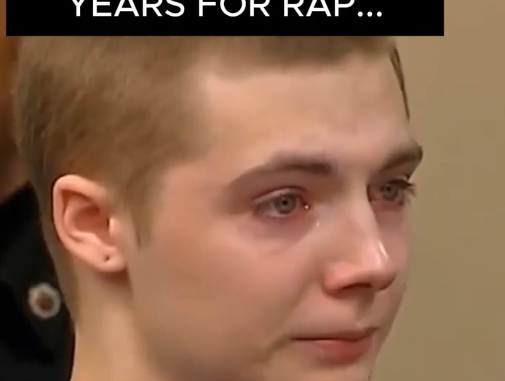
Youth Sentencing and the Difficult Questions It Raises
When young people become involved in the criminal justice system, the consequences often extend far beyond the courtroom. Serious offenses committed by teenagers force society to confront difficult questions about accountability, punishment, rehabilitation, and the unique stage of life occupied by someone who is still developing emotionally, psychologically, and socially.
These questions become even more complicated when the alleged conduct causes severe or irreversible harm. Courts must consider the seriousness of the offense and the suffering experienced by victims while also recognizing that adolescents are not simply smaller versions of adults.
High-profile cases involving teenagers who receive extraordinarily long prison sentences have brought this debate into the public spotlight. Reactions are often deeply divided. Some believe severe sentences are necessary to demonstrate accountability and protect the public, particularly when crimes involve violence or multiple victims. Others question whether effectively condemning a teenager to spend most or all of their life behind bars adequately accounts for the possibility of maturity, personal transformation, and rehabilitation.
At the heart of the debate is one difficult question:
How should society hold a young person accountable for serious wrongdoing while recognizing that adolescence is fundamentally different from adulthood?
Adolescent Development and Decision-Making
Scientific research has shown that the human brain continues developing well into young adulthood. The areas responsible for impulse control, emotional regulation, risk assessment, and long-term planning are still maturing throughout the teenage years.
As a result, adolescents may approach decisions and consequences differently from fully mature adults, particularly when emotions are intense or circumstances are changing rapidly.
Teenagers can also be especially influenced by their social environments. Peer pressure, the desire for acceptance, fear of rejection, anger, excitement, or loyalty to friends can all affect decisions that may appear very different when viewed years later.
None of this means teenagers are unable to understand right from wrong.
It also does not automatically excuse harmful or criminal behavior.
Instead, it provides important context.
A teenager can understand that an action is wrong while still having less-developed abilities to control impulses, evaluate long-term consequences, or resist immediate emotional influences.
That creates a complicated challenge for the justice system.
A young person may have caused profound and irreversible harm while also possessing a greater potential for psychological and behavioral change than someone who has already reached full adulthood.
Holding both realities in mind is one of the central difficulties of juvenile justice.
Why Juvenile Sentences Can Become Extremely Long
Sentences measured in decades—or even hundreds of years—can be difficult for the public to understand.
How can a human lifetime contain a sentence that extends far beyond it?
In many cases, extraordinarily high totals result from multiple criminal convictions rather than one individual offense. Each count may carry its own sentence, and courts may order certain sentences to be served consecutively rather than simultaneously.
When numerous serious offenses are involved, the combined sentence can therefore reach an enormous number.
Supporters of this approach argue that it allows each offense and each victim to be recognized separately.
Rather than treating multiple acts of harm as one event, each conviction contributes to the final punishment.
Critics, however, raise different concerns when the defendant was a teenager.
They question whether a sentence that effectively eliminates any realistic possibility of release leaves meaningful room for rehabilitation.
What happens if a teenager changes dramatically after twenty, thirty, or forty years?
Should the justice system ever allow that transformation to influence the punishment imposed when the person was still young?
Others argue that rehabilitation cannot be the only consideration.
The seriousness of the crime, the suffering of victims, public safety, and the need for accountability may all justify lengthy incarceration, even when the offender was an adolescent.
The disagreement ultimately reflects a much larger question about the purpose of imprisonment.
Accountability Versus Rehabilitation
Criminal justice systems generally pursue several goals at the same time.
They seek to protect society, punish wrongdoing, deter future offenses, acknowledge the harm experienced by victims, and, when possible, rehabilitate offenders.
The problem is that these objectives do not always lead to the same answer.
Youth cases make that conflict particularly visible.
Supporters of rehabilitation emphasize how dramatically people can change during adolescence and early adulthood. A teenager’s personality, emotional maturity, social environment, and ability to make decisions can evolve significantly over time.
The person standing before a parole board at age 35 could be profoundly different from the 16- or 17-year-old who committed the offense.
Rehabilitation can take many forms.
Education.
Counseling.
Vocational training.
Behavioral programs.
Mentoring.
Substance-use treatment when appropriate.
Programs designed to strengthen decision-making and emotional regulation.
Supporters argue that such interventions can reduce the likelihood of future offending and, in some circumstances, help young offenders eventually become responsible and productive adults.
But victims and their families may understandably view the issue from an entirely different perspective.
The possibility that an offender can change does not undo the damage already caused.
Rehabilitation cannot bring back someone who died.
It cannot erase trauma.
It cannot restore years that were taken from another person’s life.
For victims, accountability may therefore require consequences that reflect the seriousness and permanence of the harm.
That is what makes the balance so difficult.
Justice must consider the possibility of human transformation without minimizing irreversible suffering.
The Human Reality Inside the Courtroom
Serious youth sentencing cases are not merely legal proceedings.
They are deeply emotional events involving people whose lives may never return to what they once were.
For victims’ families, sentencing can represent the conclusion of years filled with grief, anger, uncertainty, and repeated exposure to painful evidence.
Some may believe the harshest available punishment is necessary.
Others may experience conflicting emotions.
Even a conviction cannot restore what was lost.
A sentence cannot erase grief.
And the conclusion of a trial does not necessarily bring the emotional closure that people imagine it will.
The family of the young offender faces a different kind of suffering.
Parents may struggle to reconcile the child they raised with the person described in court. Brothers and sisters may experience anger, shame, confusion, or grief. Families can recognize the seriousness of what happened while still loving the person responsible.
Those emotions can exist simultaneously.
The young defendant is also forced to confront consequences that may have been impossible to understand fully at the time the offense occurred.
A courtroom, therefore, contains far more than attorneys, evidence, statutes, and sentencing guidelines.
It contains grief.
Anger.
Fear.
Regret.
Confusion.
And sometimes, hope.
These emotions do not replace legal principles, but they help explain why sentencing decisions can affect entire families and communities for generations.
Ultimately, youth sentencing is difficult because it requires society to confront two truths at the same time: serious crimes demand accountability, yet young people are capable of profound change.
Finding a fair balance between those realities may be one of the most challenging responsibilities any justice system faces.