PART 3: THE DOOR HE LOCKED HIMSELF
I asked the social worker to write down Eli’s statement exactly as he gave it and to note that I had not questioned him before she entered the room.
Then I stopped asking questions.
My son needed a father more than I needed answers.
That night the hospital blocked my father and brother from receiving information about Eli or entering his room without my permission.
I denied permission.
Near midnight, Eli woke and asked, “Can they make me go back?”
“Not tonight,” I said.
“What about tomorrow?”
I couldn’t promise a legal outcome I didn’t control.
So I promised what I could.
“Tomorrow I’ll still be here, and I’m not agreeing to send you back.”
By morning I had filed a formal report and provided the recordings, photographs, medical records, and every documented call.
I did not call my father evil.
I wrote times, statements, injuries, and actions.
When asked about my treatment history, I answered honestly.
Yes, I needed help.
Yes, I completed treatment.
Yes, I still use what I learned there.
Then I asked that everyone else be judged by the same standard: not how calm they sounded, but what they actually did.
The temporary no-contact order stayed in place.
Eli came home three days later.
For the first week, he woke whenever a car slowed near the house. I never told him not to be afraid. I checked the door, checked the windows, and sat beside him until he slept again.
Weeks later he asked, “Why did Grandpa want people to think you were sick?”
I chose the smallest honest answer.
“Because when people believe his version first, he feels like he gets to decide what happens next.”
“Did he do that to you?”
“Yes.”
He nodded once and asked for another glass of water.
Months passed.
Eli healed.
He went back to school, left cups in the living room, and waited until the last possible minute every morning to look for his shoes.
The first time I complained about his shoes, we both stopped speaking.
His eyes went to the entryway.
So did mine.
We never recovered the shoe he lost escaping the laundry-room window.
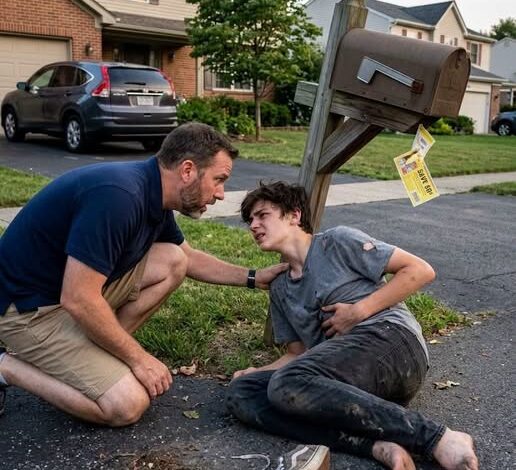
One evening, long after his ribs had healed, I came downstairs and found Eli standing at the front door in socks.
The porch light was on.
A new pair of sneakers sat neatly on the mat.
He checked the deadbolt once.
For a second I heard his frightened whisper from that July evening:
“Dad, lock the door.”
But this time nobody was chasing him.
Eli turned the lock himself, lined up both shoes side by side, and walked upstairs without looking back at the driveway.