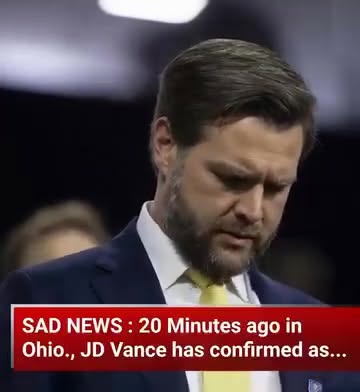
For years, JD Vance was viewed as an emerging figure within the Republican Party—a rising voice with influence, potential, and a growing national profile. Today, however, his position appears to be evolving into something far more significant. What once looked like a promising political future is increasingly being discussed as a possible path to the Republican nomination in 2028.
Recent polling has only intensified that conversation.
A survey from Emerson College found Vance holding strong favorability numbers among Republican voters while also leading early presidential preference polling by a considerable margin. At a stage when most potential candidates are still building national networks and testing political support, Vance already appears to possess something many rivals lack: a clearly defined base of voters who see him as a natural standard-bearer for the party’s future.
That advantage is difficult to ignore.
In presidential politics, early polling is never a guarantee of eventual success. Campaigns rise and fall, unexpected candidates emerge, and political landscapes can shift dramatically. Yet history shows that candidates who establish early dominance often gain important benefits long before voting begins. Donors pay attention. Activists pay attention. Party leaders pay attention. Momentum itself can become a powerful political asset.
Observers across the political spectrum have noted that Vance’s current standing resembles the early positioning of several successful presidential nominees from previous decades. The significance is not simply the numbers themselves but what those numbers may represent: growing acceptance within the Republican coalition and an expanding perception that he belongs among the party’s top-tier contenders.
Beyond traditional polling, signs of enthusiasm have also emerged within conservative activist circles.
At major conservative gatherings and grassroots events, Vance has increasingly been greeted not merely as a speaker or elected official but as a figure many supporters believe could shape the next chapter of Republican politics. Strong performances in activist surveys and straw polls have reinforced the impression that his appeal extends beyond Washington and into the broader conservative movement.
That grassroots energy matters.
Political campaigns are fueled not only by votes but by volunteers, donors, organizers, and supporters willing to invest their time and resources. Enthusiasm can translate into infrastructure, and infrastructure often becomes one of the most important ingredients in a successful national campaign.
Another factor strengthening Vance’s position is his unique political identity.
While often associated with Donald Trump’s political movement, Vance has gradually developed a profile that stands on its own. His messaging combines economic populism, cultural conservatism, and a focus on working-class concerns, allowing him to connect with multiple factions inside the Republican Party.
For some voters, he represents continuity with the party’s recent direction.
For others, he represents a younger generation capable of carrying those ideas forward.
That combination gives him a flexibility that few potential contenders currently possess.
Publicly, Vance has remained cautious about discussing future presidential ambitions. Like many politicians in similar positions, he continues to emphasize current responsibilities and near-term political priorities rather than speculation about future campaigns.
Such restraint is politically useful.
Openly campaigning years before an election can create unnecessary scrutiny and expectations. Remaining focused on present responsibilities allows a politician to build support while avoiding the appearance of being overly ambitious.
Yet even without a formal campaign, many of the building blocks associated with a future presidential run appear to be taking shape.
Polling strength.
Media attention.
Grassroots enthusiasm.
Growing donor interest.
National name recognition.
Together, these elements create the foundation upon which major campaigns are often built.
For Republicans considering the future of the party, Vance’s emergence presents both opportunity and competition. Potential rivals must now evaluate whether they can challenge a figure who already appears to hold a meaningful advantage among many Republican voters.
For Democrats, the challenge may be different.
The question is not simply whether Vance can win a Republican primary. It is whether his political appeal is being fully understood. His ability to blend populist themes with a younger generational profile may allow him to connect with voters in ways that traditional political categories fail to capture.
As a result, dismissing him as merely another political personality could prove shortsighted.
The road to 2028 remains long, and countless variables could reshape the political landscape before voters cast a single ballot. New candidates may emerge. Public opinion may shift. Unexpected events may alter priorities.
But at this moment, one reality is becoming increasingly difficult to overlook.
JD Vance is no longer simply a politician with future potential.
He is becoming a central figure in the conversation about the Republican Party’s future.
Whether that ultimately leads to the presidential nomination remains uncertain. What is clear, however, is that his influence continues to grow, and the political groundwork being laid today could shape the direction of the next Republican presidential contest long before the campaign officially begins.