What should have been a lighthearted Valentine’s Day episode of Wheel of Fortune quickly turned into one of the show’s most debated moments in recent memory.
A single puzzle. A disappointed contestant. And a wave of criticism that spread far beyond the studio.
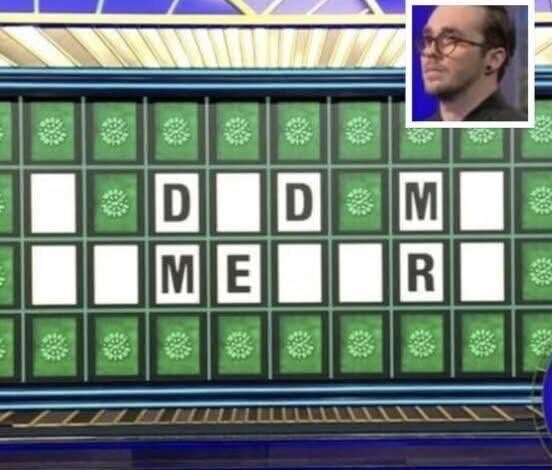
At the center of the controversy was Conner Kemmsies, a commercial pilot who entered the bonus round with plenty of momentum. He had already enjoyed a successful night, collecting more than $19,000 in cash prizes and earning a dream vacation. With his family cheering from the audience and a potential jackpot within reach, the evening seemed headed toward a perfect ending.
Then came the final puzzle.
When the category appeared as “Phrase,” many viewers expected a familiar expression or commonly used saying. Instead, Conner faced a puzzle that seemed unusually difficult despite revealing a significant number of letters. As the clock ticked down, he searched for the answer but could not put the remaining pieces together in time.
When the solution was finally revealed—“I DID MY HOMEWORK”—the reaction was immediate.
Conner laughed and joked that he was no longer in school, but viewers at home had a very different response.
For many fans, the answer simply did not feel like a traditional bonus-round phrase. Successful puzzles often create a moment of instant recognition once enough letters appear on the board. Critics argued that this one felt more like a random statement than a commonly recognized phrase, making it difficult not only for the contestant but for viewers playing along at home.
That distinction quickly fueled frustration.
The issue was not merely that Conner failed to solve the puzzle. Many fans believed they would have struggled just as much.
Within hours, social media platforms filled with complaints. Longtime viewers questioned whether puzzle construction has changed in recent years, with some arguing that categories and answers have become increasingly vague or obscure. Others suggested that contestants are now being asked to make larger leaps of logic than in previous eras of the show.
The debate soon expanded beyond a single episode.
Fans began comparing recent bonus-round puzzles, discussing prize distributions, and revisiting previous controversial losses. Some even questioned whether larger bonus prizes have become more difficult to win, although no evidence has emerged to support such claims.
Not everyone agreed with the criticism.
Many viewers defended both the puzzle and the show itself. They argued that “I DID MY HOMEWORK” is a legitimate phrase and that bonus rounds are supposed to be challenging. After all, the excitement of the final puzzle comes from uncertainty. If every answer were obvious, the suspense that makes the bonus round so compelling would disappear.
Supporters also pointed out that luck has always been a major part of the game. Contestants have won and lost difficult puzzles for decades, and part of the appeal lies in never knowing what the board will reveal.
Still, the intensity of the reaction revealed something deeper than frustration over four simple words.
For generations, Wheel of Fortune has represented consistency. Families have watched the same format, categories, and gameplay for decades. As a result, viewers develop strong expectations about what feels fair, familiar, and recognizable.
When a puzzle appears unusual, it can trigger concerns that the show is drifting away from the formula people know and trust.
Those concerns have become even more pronounced during the Ryan Seacrest era. Taking over one of television’s most beloved institutions inevitably invites comparison, and every controversial moment receives heightened scrutiny.
As a result, Conner’s loss became more than just a missed puzzle.
For some viewers, it represented evidence that the game is changing. For others, it was simply another example of how difficult bonus rounds are meant to be.
Either way, the discussion continues.
Conner Kemmsies handled the disappointment with humor and grace, earning praise from viewers regardless of where they stood on the controversy. Yet the conversation sparked by his loss remains active because it touches on something larger than a game show puzzle.
It touches on trust.
On expectations.
And on the connection millions of viewers still feel toward a show that has been part of their lives for decades.
Whether the puzzle was unfair or simply unlucky may never be settled. But one thing is certain: sometimes a few words on a game board can spark a much bigger debate than anyone expected.