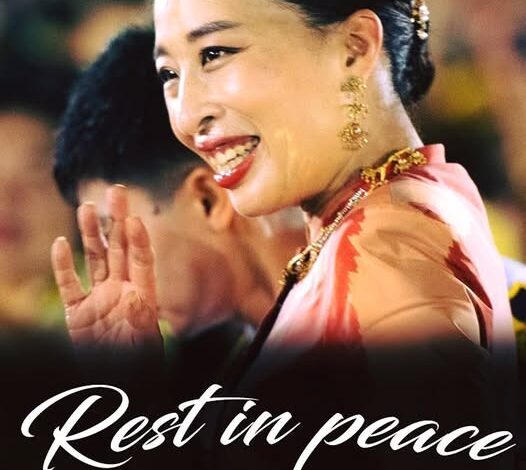
Thailand is mourning the loss of Princess Bajrakitiyabha Mahidol, the eldest daughter of King Maha Vajiralongkorn, whose passing has brought a wave of grief across the nation. She was 47 years old. After years of battling severe health complications, the princess died in Bangkok, where she had been receiving specialized medical care since a life-threatening medical emergency in late 2022.
For many Thais, her death marks more than the loss of a member of the royal family. It is the passing of a respected public servant, legal scholar, diplomat, and advocate whose work touched countless lives both within Thailand and beyond.
Official statements from the Royal Household described her passing as a profound loss for the country, prompting tributes from government leaders, international organizations, and members of the public who admired her dedication to justice, education, and social progress.
Princess Bajrakitiyabha’s health crisis began in December 2022 when she suffered a serious heart-related medical emergency and collapsed while training with her dogs. The incident left her in critical condition and led to an extended hospitalization.
In the years that followed, she remained under intensive medical supervision as doctors worked to manage a series of severe complications. Reports indicated that her condition involved infections, organ inflammation, circulatory issues, blood-clotting complications, and irregular heart function.
Throughout her treatment, updates from the Royal Household remained limited and carefully measured, reflecting both the seriousness of her condition and the family’s desire for privacy during an extraordinarily difficult period.
Despite the efforts of medical specialists and continuous care, her health never fully recovered.
Born in 1978, Princess Bajrakitiyabha was widely regarded as one of the most accomplished members of Thailand’s modern royal family.
She pursued an extensive academic path, studying law in Thailand before continuing her education in the United States. Her legal expertise would later become a defining part of her public service career.
Unlike many royal figures whose roles remain largely ceremonial, she actively engaged in legal reform, diplomacy, and international cooperation. Her work earned respect not only in Thailand but also among global organizations focused on justice and human rights.
Throughout her career, she championed initiatives aimed at improving legal systems and expanding access to fair treatment within institutions. She became particularly known for her efforts to improve conditions for women in correctional facilities, advocating for more humane rehabilitation programs and greater support for vulnerable populations.
Her work frequently brought her into collaboration with international organizations, including programs associated with the United Nations, where she contributed to discussions surrounding legal development, social policy, and justice reform.
Those who worked alongside her often described her as thoughtful, disciplined, and deeply committed to public service.
She represented a generation of royal leadership that combined tradition with professional expertise. Her academic background, legal training, and practical engagement in public policy allowed her to serve as a bridge between Thailand’s historic institutions and the evolving challenges of the modern world.
Many viewed her as a progressive voice within the royal family, one who understood that meaningful change often requires both compassion and action.
Her influence extended well beyond official duties. Through countless projects and initiatives, she worked to improve opportunities for disadvantaged communities and strengthen awareness of social justice issues.
Following news of her passing, expressions of sorrow spread rapidly across Thailand.
Government officials, public servants, community leaders, and ordinary citizens shared tributes honoring her life and contributions.
In a televised address, Prime Minister Anutin Charnvirakul described the moment as one of national mourning, highlighting her unwavering commitment to public service and her dedication to improving the lives of others.
Messages of condolence also arrived from international partners and organizations that had collaborated with the princess throughout her career. Many praised her intelligence, professionalism, and genuine concern for social issues affecting vulnerable populations.
For countless people, her legacy will be remembered not through titles or ceremonies alone, but through the practical impact of the work she devoted herself to for decades.
The Royal Household has announced that Princess Bajrakitiyabha will be honored with full royal funeral ceremonies in accordance with long-standing Thai traditions.
The ceremonies are expected to take place at the Grand Palace in Bangkok, one of the nation’s most significant cultural and historical sites. As with previous royal funerals, the rites will incorporate formal rituals that reflect Thailand’s heritage, spiritual traditions, and respect for the monarchy.
These ceremonies are anticipated to draw participation from government leaders, diplomats, members of the royal family, and citizens wishing to pay their respects.
For many, the events will serve not only as a farewell but as a celebration of a life dedicated to service.
As Thailand reflects on her passing, Princess Bajrakitiyha’s legacy remains firmly rooted in the values she championed throughout her life: justice, education, compassion, and public responsibility.
Her accomplishments in law, diplomacy, and social reform earned her recognition far beyond royal circles. She demonstrated how influence can be used not merely to preserve tradition but to address contemporary challenges and improve the lives of others.
While her final years were marked by illness and prolonged medical struggle, the broader story of her life is one of dedication, intellect, and service.
The nation now says goodbye to a princess who devoted herself to causes larger than herself—a woman whose work continues to shape conversations about justice, equality, and human dignity.
Though she is gone, the impact of her contributions will continue to be felt for years to come, ensuring that her memory remains an enduring part of Thailand’s modern history.