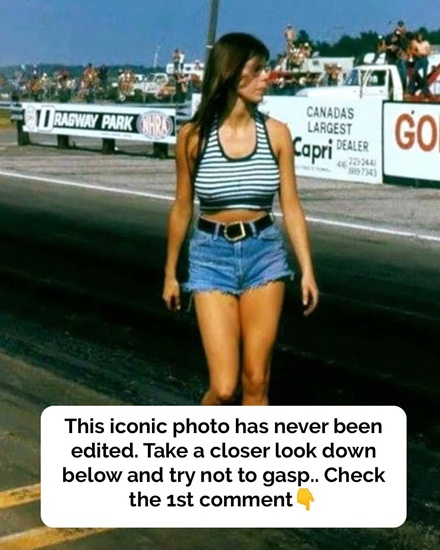
Few personalities are as closely associated with the golden age of American drag racing as Jungle Pam Hardy. Although her time in the spotlight lasted only a handful of years, her influence on the sport and its culture remains unforgettable. Decades later, fans still remember her as one of the most recognizable figures of the 1970s drag racing scene—a period defined by roaring engines, larger-than-life characters, and a level of showmanship that helped transform racing into a national spectacle.
Jungle Pam rose to prominence through her partnership with legendary drag racer Jim Liberman, better known to fans as “Jungle Jim.” Together, they became one of motorsport’s most iconic duos, combining competitive racing with entertainment in a way that captivated audiences across the country. At a time when drag racing was growing rapidly in popularity, their presence helped attract attention far beyond traditional racing fans.
Pam’s introduction to the sport came in the early 1970s after meeting Liberman shortly before graduating from high school. What began as a chance encounter quickly evolved into a life-changing opportunity. Instead of pursuing a more conventional path, she chose to join him on the racing circuit, traveling from track to track and becoming an integral part of the team.
Far more than a spectator, Pam played an active role during race weekends. She assisted with staging the car at the starting line, helped monitor vehicle readiness, and supported the crew throughout race day operations. Her visibility at the track, combined with her enthusiasm and confidence, quickly made her a favorite among spectators. Fans appreciated not only her appearance but also her genuine involvement in the racing process.
As drag racing magazines and media outlets expanded coverage of the sport, photographs of Jungle Pam became increasingly common. Her image appeared in publications across the country, helping introduce new audiences to drag racing. Before long, she became one of the most photographed women in motorsports, a status that further elevated the profile of Liberman’s team.
Jim Liberman himself was already known for his fearless driving style and charismatic personality. He embraced the entertainment side of racing as much as the competition, and Pam’s presence complemented that approach perfectly. Together they created a unique identity that stood out in a crowded field of talented racers. Their combination of speed, humor, and personality made them one of the most popular attractions wherever they competed.
Despite the attention she received, Pam often emphasized that racing was a team effort. She viewed her role as supporting the overall success of the operation rather than seeking individual recognition. Her dedication to the team and the sport helped create a partnership that fans still celebrate decades later.
Tragically, that chapter came to an abrupt end in 1977 when Jim Liberman was killed in a racing accident. His death sent shockwaves throughout the drag racing community and marked the end of one of the sport’s most memorable partnerships. Deeply affected by the loss, Pam stepped away from active participation in drag racing and chose not to continue in the same role with other drivers.
In the years that followed, she largely stayed out of the spotlight while remaining connected to the memory of the era she helped define. From time to time, she participated in events honoring Liberman’s legacy and the history of drag racing, allowing longtime fans the opportunity to reconnect with a figure who had become part of the sport’s folklore.
Today, photographs and video footage from the 1970s continue to keep that legacy alive. They serve as reminders of a unique period when drag racing was driven not only by horsepower and competition but also by personality, charisma, and fan engagement. Jungle Pam became a symbol of that era—a time when racers and crews forged personal connections with spectators and transformed race weekends into unforgettable experiences.
While she never sat behind the wheel as a professional driver, Pam Hardy’s contribution to drag racing culture remains significant. Her presence helped broaden the sport’s appeal and contributed to the excitement that defined one of its most celebrated periods. More than fifty years later, her name continues to evoke memories of packed grandstands, roaring engines, and the larger-than-life personalities that made drag racing a uniquely American phenomenon.
For many fans, Jungle Pam remains more than a nostalgic figure. She represents a moment in motorsport history when talent, passion, and showmanship came together to create something unforgettable—a legacy that continues to endure long after the engines have gone silent.