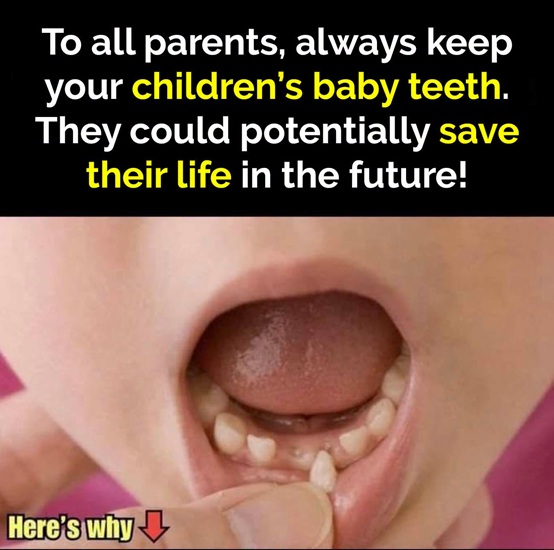
For generations, a child losing a baby tooth has been seen as a simple rite of passage. Teeth tucked beneath pillows, visits from the Tooth Fairy, and small keepsakes saved by parents have long been part of childhood tradition. Yet in recent years, scientists have begun looking at baby teeth from a very different perspective. Hidden within the soft tissue inside each tooth is dental pulp, a source of stem cells that researchers believe could one day play a role in future medical treatments.
Stem cells have attracted significant scientific interest because of their unique ability to develop into various specialized cell types. Their regenerative potential has made them a major focus of research into tissue repair, disease treatment, and personalized medicine. While certain stem cell therapies are already used successfully in healthcare today—particularly through bone marrow and umbilical cord blood transplants—scientists continue searching for additional sources of these remarkable cells, including those found in naturally shed baby teeth.
Interest in stem cell science has grown partly because of the life-changing outcomes seen in some patients receiving established stem cell treatments. Children and adults with serious blood disorders, immune deficiencies, and certain forms of cancer have benefited from therapies that use healthy stem cells to rebuild damaged blood and immune systems. These treatments demonstrate the powerful role stem cell research already plays in modern medicine.
One widely discussed example involved a young boy named Jenson Wright, who faced repeated battles with cancer during childhood. After conventional treatments failed to provide lasting results, he received a stem cell transplant using donated umbilical cord blood. According to reports from his family, the procedure helped support his recovery by providing healthy new blood-forming cells. While every patient’s journey is unique, stories like Jenson’s have helped raise awareness about the real-world impact of stem cell therapies already available today.
Cord blood banking has become increasingly popular because umbilical cord blood contains stem cells that can be collected and preserved at birth. Unlike many emerging stem cell applications, cord blood is already used in approved medical treatments for specific diseases. The success of these therapies has encouraged researchers to explore whether other sources of stem cells—including those found in baby teeth—could one day offer additional medical benefits.
Inside baby teeth, researchers have identified specialized cells known as mesenchymal stem cells. Laboratory studies suggest these cells may have the potential to contribute to bone repair, nerve regeneration, tissue healing, and other regenerative applications. While the early findings are promising, experts emphasize that many of these potential uses remain experimental and require extensive research before becoming standard medical treatments.
The process of preserving stem cells from baby teeth is relatively simple. When a healthy tooth falls out naturally, specialized preservation services can collect and store it under carefully controlled conditions designed to maintain cell viability. Supporters view this as a form of biological insurance for the future, while critics note that many practical applications remain uncertain and may never become widely available.
One advantage often discussed is that stem cells collected from a person’s own body may reduce the risk of immune rejection if they are used in future treatments. Because the cells originate from the individual, compatibility challenges could potentially be minimized. This possibility has generated considerable interest among researchers studying personalized medicine and regenerative healthcare.
Despite the excitement surrounding dental stem cell research, medical professionals encourage families to maintain realistic expectations. Most proposed uses of stem cells from baby teeth are still being investigated, and many have not yet undergone the extensive clinical testing required for widespread approval. Scientific breakthroughs often take years—or even decades—to move from the laboratory to everyday medical practice.
Cost is another factor families must consider. Private stem cell preservation services typically involve both collection fees and ongoing storage expenses. For some parents, preserving biological material that may someday have medical value offers peace of mind. Others may prefer to focus on healthcare options with more established clinical evidence. Ultimately, the decision is a personal one that depends on individual priorities, financial considerations, and views about emerging medical technologies.
Researchers continue publishing new findings on the capabilities and potential applications of stem cells obtained from baby teeth. Regenerative medicine has already transformed certain areas of healthcare, and many scientists remain optimistic that future discoveries could expand treatment possibilities even further. At the same time, experts stress the importance of distinguishing between therapies available today and those that remain experimental.
The growing interest in baby tooth stem cell preservation reflects a broader shift toward preventive and personalized healthcare. As medical science advances, more families are exploring ways to prepare for future health challenges. Whether through cord blood banking, participation in research initiatives, or simply staying informed about new developments, people are increasingly seeking opportunities to benefit from future medical innovations.
Ultimately, baby teeth may represent more than a childhood milestone, but their role in medicine is still being defined. Ongoing research continues to explore their potential, healthcare professionals continue evaluating the evidence, and families continue weighing the possible benefits against the uncertainties. While no one can predict exactly how regenerative medicine will evolve in the coming decades, stem cells from baby teeth remain one of the most intriguing areas of research shaping the future of healthcare.