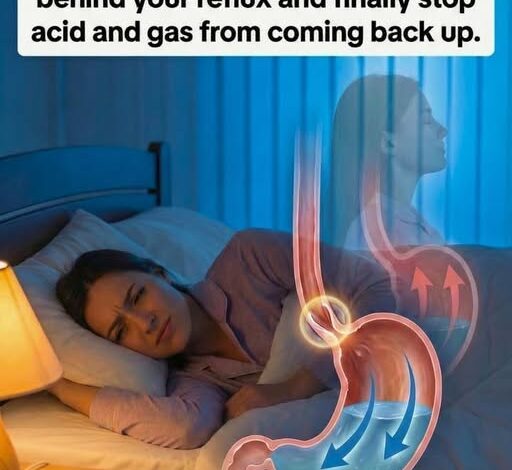
Do you regularly experience a burning sensation in your chest after meals? Or perhaps your symptoms seem less obvious—frequent throat clearing, a persistent lump in the throat, excess mucus, hoarseness, chronic coughing, or a sour taste that never quite goes away.
Many people assume these problems are unrelated.
One feels like a stomach issue.
The other feels like a throat problem.
Yet they can often stem from the same underlying cause: acid reflux resulting from a weakened stomach valve.
A common misconception is that reflux occurs only because the stomach produces too much acid. In reality, the issue is often mechanical rather than chemical. The problem is not necessarily how much acid the stomach contains, but whether that acid stays where it belongs.
At the center of this process is a muscular valve known as the lower esophageal sphincter (LES).
Think of the LES as a gate between the esophagus and the stomach. Under normal circumstances, it opens to allow food and liquids into the stomach and then closes tightly afterward. When the valve becomes weak or relaxes at inappropriate times, stomach acid and gases can travel upward into the esophagus.
That backward flow is known as reflux.
Once stomach contents move into areas that are not designed to handle acid exposure, irritation can occur in the chest, throat, voice box, and even the mouth.
Why Reflux Happens
The stomach is not simply a storage container.
It functions more like a pressurized chamber.
Every meal increases pressure inside the stomach. If the LES is functioning properly, it prevents that pressure from pushing stomach contents upward. If the valve is weakened, overwhelmed, or repeatedly relaxed, reflux becomes more likely.
This helps explain why some people experience significant reflux symptoms even when their stomach acid levels are completely normal.
Acid itself is not the enemy.
Your body needs it for digestion.
The real problem begins when acid escapes into areas that lack the protective lining found inside the stomach.
Because the esophagus and throat are much more sensitive, even small amounts of reflux can cause noticeable symptoms.
This also explains why acid-reducing medications sometimes provide only partial relief. While these medications can make reflux less irritating, they do not necessarily correct the mechanical issues contributing to the problem.
Mistake #1: Eating Too Much
One of the most common triggers for reflux is overeating.
Large meals stretch the stomach and increase internal pressure. As pressure builds, the LES must work harder to keep stomach contents from moving upward.
When the stomach becomes excessively full, the valve can struggle to keep up.
This is why reflux frequently appears after:
- Large dinners
- Holiday meals
- Buffets
- Late-night eating
- Heavy or rich foods
A useful strategy is to stop eating before you feel completely full.
Many experts recommend aiming for about 80 percent fullness rather than eating until you feel stuffed.
Smaller meals create less pressure and are often easier for the stomach to process.
It may also help to avoid consuming large amounts of liquid alongside meals, as excessive fluid can contribute to stomach distension.
Mistake #2: Lying Down Too Soon
Gravity is one of the body’s natural defenses against reflux.
When you remain upright, gravity helps keep stomach contents where they belong.
When you lie down shortly after eating, that advantage disappears.
If the stomach is full or the LES is weak, acid can move upward more easily.
This is one reason why many people notice symptoms at night or after reclining on the couch following dinner.
To reduce risk, try waiting at least two to three hours after eating before lying down.
Many people also find relief by:
- Sleeping on the left side
- Raising the head of the bed
- Using a wedge pillow designed for reflux
These strategies can help reduce nighttime symptoms by limiting the ability of stomach contents to flow backward.
Foods and Habits That May Trigger Reflux
Certain foods and lifestyle habits can relax the LES and make reflux more likely.
Common triggers include:
- Peppermint and mint products
- Chocolate
- Alcohol
- Tobacco
- Fried foods
- High-fat meals
- Spicy foods
- Coffee
- Carbonated beverages
- Citrus fruits
- Tomato-based sauces
Not everyone reacts to the same triggers.
Keeping a symptom journal for several weeks can help identify which foods are most problematic for you.
Rather than permanently eliminating everything at once, many people benefit from temporarily reducing common triggers and then gradually reintroducing them to evaluate tolerance.
A Three-Step Approach to Managing Reflux
Step 1: Reduce Pressure on the Stomach
Focus on habits that decrease stress on the LES:
- Eat smaller meals
- Avoid late-night eating
- Stay upright after meals
- Avoid tight clothing around the waist
- Maintain a healthy weight if recommended by your healthcare provider
Even modest adjustments can significantly reduce symptoms.
Step 2: Consider Additional Support
Some people benefit from alginate-based products, which create a protective barrier that sits on top of stomach contents and helps reduce reflux episodes.
These products are commonly used after meals or before bedtime, particularly for people who experience nighttime symptoms.
Always follow product instructions and consult a healthcare professional if you take other medications.
Step 3: Protect the Throat
For individuals who experience:
- Chronic throat clearing
- Hoarseness
- Persistent coughing
- Excess mucus
- A constant lump sensation
Reflux may be reaching the throat and voice box.
Reducing irritation and supporting healing can be helpful, but persistent symptoms should always be evaluated by a healthcare professional.
When to Seek Medical Attention
Lifestyle changes can improve many cases of reflux, but certain symptoms require medical evaluation.
Contact a healthcare provider if you experience:
- Difficulty swallowing
- Worsening swallowing problems
- Unexplained weight loss
- Frequent vomiting
- Black stools
- Vomiting blood
- Persistent symptoms despite treatment
Chest pain should never be automatically assumed to be reflux.
Seek urgent medical care if chest discomfort occurs with:
- Shortness of breath
- Sweating
- Dizziness
- Nausea
- Pain spreading to the arm, jaw, neck, or back
These symptoms may indicate a heart-related emergency.
Final Thoughts
Reflux is about more than stomach acid alone.
It involves pressure, body position, timing, eating habits, and the strength of the valve separating the stomach from the esophagus.
When that valve is not functioning properly, acid and stomach contents can travel upward and trigger symptoms in the chest, throat, mouth, and voice.
Fortunately, many people can improve their symptoms through practical lifestyle adjustments.
Eating smaller meals.
Avoiding overeating.
Staying upright after meals.
Sleeping in a better position.
Limiting trigger foods.
Reducing pressure on the stomach.
These simple changes often work together to create meaningful relief.
Start with one adjustment at a time.
Eat dinner earlier.
Stop before feeling overly full.
Raise the head of your bed.
Avoid common trigger foods for a short trial period.
Small changes can produce significant improvements.
Understanding how reflux works helps transform it from a confusing condition into a manageable one. By supporting your digestive system, protecting your throat, and reducing common triggers, you can often improve comfort, sleep quality, digestion, and overall well-being.