Donald Trump Makes Strong Remarks on Possible Prison Sentence as Reflecting Pool Faces New Issue

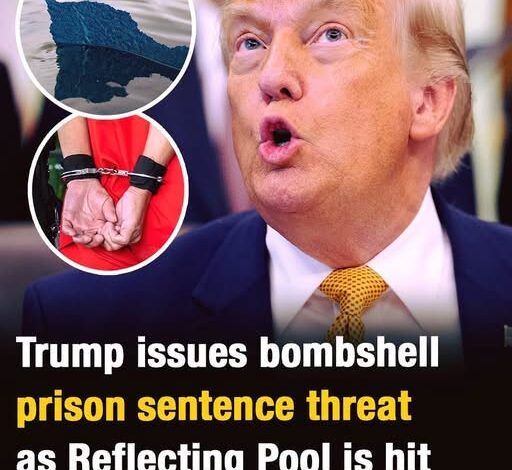
The recent renovation of the Lincoln Memorial Reflecting Pool in Washington, D.C., has become the focus of public attention following reports of visible damage, allegations of vandalism, and public comments from former President Donald Trump. Located between the Lincoln Memorial and the Washington Monument, the Reflecting Pool is one of the nation’s most recognizable landmarks, attracting millions of visitors each year.
The historic site recently underwent an extensive restoration project reportedly costing approximately $14.7 million. The work included cleaning, structural repairs, and restoration efforts intended to preserve the landmark while improving its appearance and long-term condition. Not long after the project was completed, however, visitors and media outlets began reporting concerns about the pool, including algae growth, peeling surface material, and other signs of deterioration.
According to contractors involved in the renovation, at least some of these issues appear to be relatively limited and may be addressed through warranty repairs. They also noted that outdoor water features require continuous maintenance and that environmental conditions, water chemistry, and seasonal changes can contribute to temporary issues such as algae buildup or discoloration.
As reports of the damage spread, allegations of vandalism quickly entered the public conversation. Some accounts suggested that individuals intentionally damaged portions of the newly restored surface, while others cautioned that investigators have not yet publicly determined the exact cause of the observed damage. Although law enforcement officers reportedly responded to incidents at the site and issued several citations, authorities have not released evidence publicly confirming that the structural damage resulted from deliberate acts of vandalism.
The Department of the Interior has acknowledged that multiple police reports were filed concerning activity around the Reflecting Pool and confirmed that several citations were issued. However, officials have indicated that the incidents remain under review, and detailed information regarding the nature of those citations has not yet been publicly disclosed.
Media coverage also highlighted the account of a former Olympic athlete who was reportedly detained at the site. He has denied intentionally damaging the memorial, stating that he merely touched material that had already begun peeling rather than causing it to detach. His explanation has added further uncertainty to the situation, underscoring the distinction between allegations, eyewitness accounts, and officially confirmed findings.
Former President Donald Trump has publicly addressed the controversy, asserting through social media posts and public remarks that the Reflecting Pool was intentionally vandalized. He also emphasized that damaging federal monuments can carry significant legal penalties, referencing potential prison sentences of up to ten years for certain offenses involving federal property. While his comments have attracted widespread attention, the allegations of intentional vandalism have not been independently confirmed through publicly released evidence from federal investigators.
Federal agencies, including the U.S. Park Police and the Department of the Interior, have stated that their review remains ongoing. Officials continue to evaluate police reports, citations, and the physical condition of the site before determining whether any additional legal action is appropriate.
Representatives familiar with the federal legal process have noted that allegations involving damage to government property are treated seriously and investigated through established procedures. However, as of now, no publicly announced criminal charges specifically alleging intentional vandalism of the Reflecting Pool have been confirmed in court.
The contractor responsible for the restoration has maintained that the visible damage appears limited in scope and is likely repairable under warranty. Company representatives also emphasized that continued maintenance is an expected part of preserving large outdoor water features that are constantly exposed to weather, changing temperatures, and heavy public use.
The controversy has also taken on a political dimension. Some observers view the reported damage as evidence of disrespect toward a nationally significant monument, while others argue that conclusions should be reserved until investigators complete their review and release additional findings.
For the moment, many questions remain unanswered. Authorities continue examining the available evidence, reviewing incident reports, and assessing the condition of the Reflecting Pool. Until those investigations are complete, the precise cause and extent of the reported damage remain uncertain.
Regardless of the final findings, the situation has renewed discussion about preserving historic public landmarks, ensuring accountability for costly restoration projects, and distinguishing verified facts from claims made before official investigations have concluded. As the review continues, federal officials are expected to provide additional information regarding the condition of the Reflecting Pool, the need for any further repairs, and whether any criminal conduct ultimately occurred.