Imagine stepping outside on a warm morning, only to discover your patio furniture coated in a sticky film, your car covered with mysterious droplets, and the leaves of your favorite trees stained black. As you look closer, a colorful insect clings to the trunk nearby. With spotted wings and flashes of bright red as it jumps into the air, it almost looks harmless—even beautiful. But don’t let its appearance fool you. You may be looking at the spotted lanternfly, an invasive insect that has become one of the most destructive pests threatening trees, vineyards, gardens, and farms across parts of North America.
Unlike mosquitoes or stinging insects, spotted lanternflies don’t bite people, spread disease, or damage homes directly. Their real target is plants. Native to parts of Asia, the species was first discovered in the United States in 2014 and has steadily expanded into more states ever since. Today, it feeds on the sap of more than 70 different plant species, including maple trees, walnut trees, grapevines, fruit trees, willow, and many ornamental plants. Large infestations can gradually weaken vegetation, reduce crop yields, and place enormous stress on both residential landscapes and commercial agriculture.
One of the earliest clues that these insects have moved into an area isn’t always seeing the insects themselves. Instead, many homeowners first notice a sticky substance coating everything beneath infested trees. This sugary liquid, known as honeydew, is produced as the insects feed on plant sap. It can quickly cover cars, sidewalks, decks, outdoor furniture, grills, children’s play equipment, and anything else beneath the trees. Besides creating a frustrating mess, the honeydew attracts ants, bees, wasps, and numerous other insects searching for an easy food source.
The problems don’t stop there. The sticky coating creates ideal conditions for a black fungus called sooty mold. Although the fungus doesn’t directly infect the tree, it spreads across leaves and branches, blocking sunlight needed for photosynthesis. Trees that are already stressed by heavy feeding become even weaker, often producing less fruit and becoming more vulnerable to disease, drought, and other environmental pressures.
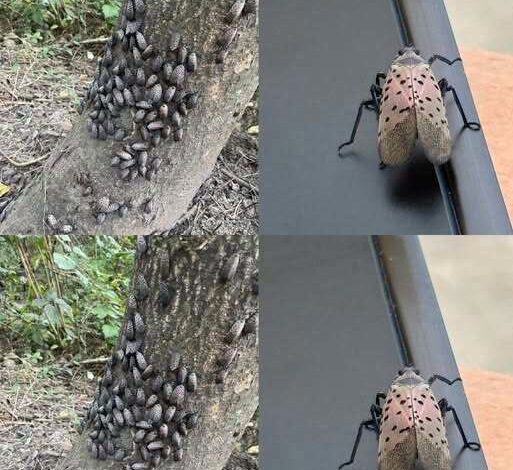
Recognizing the spotted lanternfly during each stage of its life cycle is one of the most effective ways to stop an infestation before it grows. In the spring, newly hatched nymphs are tiny, black, and covered with bright white spots. They cannot fly, but they move surprisingly fast as they hop from plant to plant searching for food.
As summer progresses, these immature insects change dramatically in appearance. Their bodies become larger, and vivid red patches begin to appear alongside the familiar black-and-white markings. Many homeowners are surprised because these colorful juveniles look completely different from the adults that emerge later in the year.
By late summer and early autumn, adult spotted lanternflies begin appearing. When resting, their wings are folded neatly over their backs, displaying mostly gray coloring with black spots. However, the moment they spread their wings or leap into the air, brilliant scarlet hindwings bordered with black become visible, making them easy to recognize. Adults measure roughly one inch in length and are powerful jumpers, although they usually fly only short distances before landing again.
If you discover spotted lanternflies on your property, experts recommend acting as quickly as possible. In areas where the insect is considered invasive, removing or eliminating individual insects can help reduce local populations. A single lanternfly is unlikely to kill a healthy tree, but hundreds or even thousands feeding together over time can seriously weaken plants.
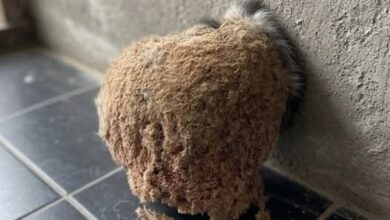
As autumn arrives, attention should shift toward finding egg masses before they hatch the following spring. Female lanternflies lay eggs on almost any solid surface, including tree trunks, fences, rocks, trailers, campers, outdoor furniture, firewood, and even vehicles. The egg masses resemble smears of gray or tan putty or dried mud and are usually about one to two inches long. Each mass may contain dozens of eggs waiting to hatch once temperatures begin to rise.
Homeowners can carefully scrape these egg masses into containers filled with rubbing alcohol or hand sanitizer to destroy the eggs before they hatch. Simply knocking them onto the ground may not be enough, as some eggs can survive if they are not properly disposed of.
Another important step is identifying one of the insect’s favorite host plants: the Tree of Heaven, also known as Ailanthus altissima. This fast-growing invasive tree is commonly found along roadsides, abandoned lots, railroad tracks, and forest edges. Although spotted lanternflies feed on many different plants, they are especially attracted to Tree of Heaven during key parts of their life cycle. Removing these trees where appropriate, or managing them under professional guidance, can help reduce suitable habitat for growing lanternfly populations.
Some homeowners choose to install sticky bands around tree trunks to trap climbing nymphs before they reach the canopy. While these traps can be effective, experts recommend covering them with protective wire mesh or similar barriers to prevent birds, squirrels, reptiles, and other wildlife from becoming accidentally trapped. Protecting native wildlife should always remain an important part of any pest-control strategy.
One reason spotted lanternflies have spread so rapidly is their remarkable ability to hitchhike. Adults and egg masses can easily cling to vehicles, trailers, outdoor furniture, landscaping equipment, pallets, campers, and firewood. People may unknowingly transport them hundreds of miles before realizing they are there. Carefully inspecting vehicles and equipment before leaving infested areas is one of the simplest and most effective ways to slow their spread.
If you live in an area where spotted lanternflies have recently appeared—or where they have not yet become widespread—local agricultural agencies often encourage residents to report sightings. Early detection helps officials monitor new infestations and respond before populations become firmly established. Your state’s Department of Agriculture or natural resources agency can usually provide reporting instructions and recommendations specific to your area.
Researchers continue searching for long-term solutions. Compared with their native habitat in Asia, spotted lanternflies have relatively few natural predators in North America. Scientists, farmers, foresters, and agricultural specialists are working together to study biological controls, improve management strategies, and develop environmentally responsible methods for reducing the insect’s impact.
Fortunately, homeowners can make a real difference. Regularly inspecting trees, destroying egg masses, checking outdoor equipment, learning to recognize every stage of the insect’s life cycle, and following local recommendations all help slow its spread. Community involvement is especially important because spotted lanternflies do not respect property lines. Successful control depends on neighborhoods working together rather than treating infestations one yard at a time.
Finding spotted lanternflies in your yard can certainly be discouraging, especially if you’ve spent years caring for healthy trees, gardens, or landscaping. However, taking action early often prevents much larger problems later. Staying informed and responding quickly helps protect not only your own property but also nearby forests, vineyards, farms, parks, and natural areas that remain vulnerable to this invasive pest.
Your backyard should be a place to relax and enjoy nature—not a battleground against destructive invasive insects. By remaining alert, managing infestations responsibly, and working together with your community, you can help reduce the spread of spotted lanternflies and preserve the health of the trees and plants that make our neighborhoods so valuable.