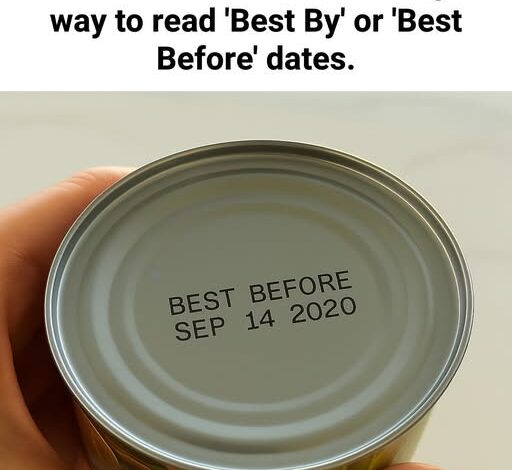
Almost everyone has a forgotten can sitting somewhere in the back of the pantry.
It’s the one you rediscover while reorganizing shelves or searching for ingredients, only to notice that the date printed on the label has already passed. For many people, the immediate reaction is simple: throw it away.
But the reality may be more surprising than you think.
Many of the dates printed on canned foods are not strict safety deadlines. In most cases, labels such as “Best By” or “Best Before” are intended to indicate when the manufacturer believes the product will have its best flavor, texture, and overall quality—not the moment it suddenly becomes unsafe to eat.
This distinction often causes confusion among consumers.
Even “Use By” dates, which appear more frequently on fresh products like dairy and refrigerated foods, are commonly associated with peak quality rather than an exact expiration point. When it comes to canned goods, proper storage conditions are often far more important than the date printed on the label.
Cans stored in a cool, dry environment away from excessive heat and direct sunlight can remain safe for much longer than many people realize.
The type of food inside also makes a difference.
High-acid canned foods, including tomatoes, citrus products, and pineapple, generally maintain their best quality for about 12 to 18 months. While flavor and texture may gradually decline over time, the food does not automatically become unsafe once that date has passed.
Low-acid foods tend to last even longer.
Items such as beans, vegetables, soups, stews, and canned meats can often retain their safety and usability for three to five years—or sometimes longer—when stored properly. Food safety specialists emphasize that the condition of the can itself is often the most important factor.
An intact, properly sealed can is usually a good sign.
The real warning signs are physical damage or unusual changes.
If a can is swollen, bulging, leaking, heavily rusted, or deeply dented along a seam, it should be discarded immediately. Likewise, if the contents produce an unusual odor, appear discolored, or spray liquid when opened, they should not be consumed.
These signs may indicate contamination or spoilage, regardless of the printed date.
Understanding the difference between food quality and food safety can help households make smarter decisions.
Millions of perfectly usable food products are discarded every year simply because people misunderstand date labels. Taking a moment to inspect a can carefully before throwing it away can help reduce waste, save money, and make grocery budgets stretch further.
The next time you find an old can tucked away in your pantry, don’t rely solely on the date.
Check the packaging.
Inspect the contents.
Trust the condition of the product as well as the label.
With proper storage and a basic understanding of food safety, many canned foods can remain a reliable pantry staple long after the printed date has passed. Sometimes, a little knowledge is all it takes to turn what looks like expired food into a perfectly good meal.