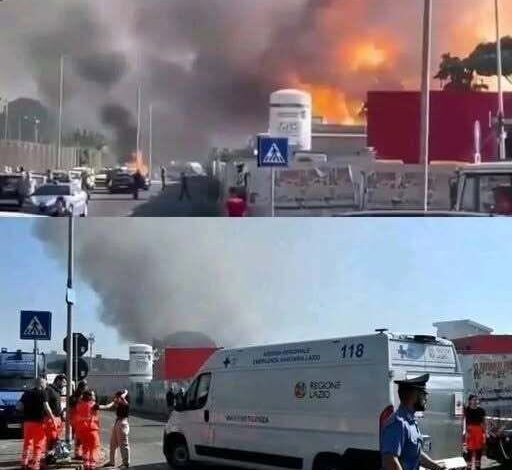
What began as an ordinary morning commute quickly descended into chaos when a devastating crash involving a tanker truck carrying liquefied petroleum gas turned a busy highway into a scene of destruction. Along the heavily traveled Iztapalapa–Chalco route, thousands of commuters were making their way through rush-hour traffic when disaster struck. Within moments, a routine drive became a fight for survival as flames, smoke, and panic engulfed the roadway.
According to reports, the tanker was transporting more than 13,000 gallons of LPG when it overturned, triggering a massive explosion that sent a towering fireball into the sky. Witnesses described hearing an enormous blast that echoed across nearby neighborhoods, shaking buildings and startling residents miles away. Thick black smoke rapidly spread through the area, turning the morning sky dark as emergency calls flooded dispatch centers.
Drivers caught in the congestion found themselves trapped as flames spread rapidly from vehicle to vehicle. Many abandoned their cars and fled on foot, while others desperately searched for a safe escape route amid the confusion. In a matter of minutes, dozens of vehicles were engulfed, leaving behind a landscape of twisted metal and scorched pavement.
The human impact of the disaster was severe. Multiple fatalities were reported, while dozens more suffered injuries ranging from burns to smoke inhalation. Emergency responders rushed to the scene, working under dangerous conditions to extinguish the fire, assist victims, and prevent additional explosions. Hospitals across the region received a surge of injured patients as medical teams mobilized to handle the crisis.
Beyond the immediate casualties, the explosion caused extensive damage to nearby communities. Residents reported feeling vibrations similar to an earthquake as the blast wave traveled through surrounding neighborhoods. Businesses, homes, and infrastructure sustained varying degrees of damage, adding to the scale of the disaster and leaving many residents shaken.
As investigators began examining the wreckage, questions quickly emerged regarding what led to the catastrophe. Preliminary reports pointed to several possible factors, including mechanical failure, excessive speed, or driver error. Authorities also began reviewing whether all required safety protocols and transportation regulations had been followed before the vehicle entered one of the most densely populated areas of the metropolitan region.
The incident has reignited concerns about the transportation of hazardous materials through urban corridors. Safety advocates argue that highly flammable cargo moving through heavily populated areas presents significant risks, particularly during peak traffic hours. Calls for stricter inspections, enhanced oversight, and alternative transport routes have intensified in the aftermath of the explosion.
For many residents, the tragedy represents more than a transportation accident. It has become a symbol of broader concerns about infrastructure safety, regulatory enforcement, and the balance between economic activity and public protection. Community leaders and safety experts alike have urged authorities to examine existing policies to reduce the likelihood of similar disasters in the future.
In the days following the explosion, the affected stretch of highway became a place of mourning. Flowers, candles, and handwritten messages appeared near the site as families and community members gathered to honor those who lost their lives. The blackened roadway stands as a powerful reminder of how quickly an ordinary day can be transformed by tragedy.
As the investigation continues, many questions remain unanswered. What is already clear, however, is the profound impact the disaster has had on the lives of survivors, families, and the broader community. For those who witnessed the explosion, the memories of the smoke, the fire, and the desperate moments that followed will not soon be forgotten.
The tragedy has left a lasting mark on Mexico City and renewed calls for stronger safeguards to ensure that a routine commute never again turns into a catastrophe of this scale.