Millions of Login Credentials Exposed Online — Here’s How to Check If Your Information Was Affected

Most people believe that protecting their online accounts begins and ends with creating a strong password. While strong passwords remain important, cybersecurity experts warn that modern threats have become far more sophisticated. Instead of targeting websites directly, many cybercriminals now focus on individuals, using malicious software designed to steal sensitive information straight from personal devices.
One of the fastest-growing cybersecurity threats involves a type of malware known as an infostealer. These programs are specifically designed to operate quietly in the background after infecting a computer. Once active, they search for valuable information such as saved passwords, browser data, cookies, authentication tokens, and other personal details stored on the device. This information is then transmitted to cybercriminals, who may use it to access online accounts, commit identity theft, or launch additional attacks.
What makes infostealer malware particularly concerning is that victims often have no idea their information has been compromised. Unlike traditional cyberattacks that target a specific company or website, infostealers collect data directly from users. As a result, anyone can become a target regardless of which online services they use.
Cybersecurity researchers report that these threats have become increasingly widespread in recent years. Because of this growing risk, experts continue to encourage stronger security practices, including using unique passwords for every account and enabling two-factor authentication whenever it is available. These measures can provide an additional layer of protection, making it significantly more difficult for criminals to gain access even if login credentials are exposed.
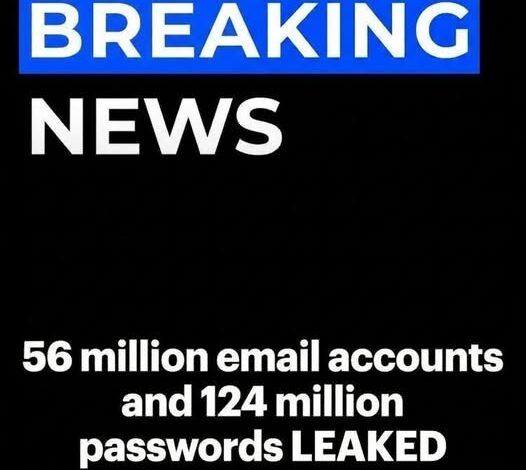
The latest warning follows the discovery of a massive collection of stolen credentials that has been added to the Have I Been Pwned (HIBP) database, a service that allows users to check whether their personal information has appeared in known data exposures. According to HIBP, the newly added records include more than 56 million unique email addresses and approximately 124 million unique passwords gathered from infected devices around the world.
Researchers emphasize that this dataset did not originate from a breach of a single company. Instead, it was compiled from hundreds of millions of individual infostealer logs collected from compromised computers. The scale of the exposure highlights how widespread malware-based credential theft has become.
Anyone who discovers their information within the database is advised to take immediate action. Security experts recommend changing affected passwords, creating strong and unique credentials for every account, using a reputable password manager, and enabling two-factor authentication on important services. While some of the exposed passwords may already be outdated, others may still be protecting active accounts, making prompt security reviews essential.
The incident serves as a reminder that online security extends far beyond creating a single strong password. As cybercriminal tactics continue to evolve, staying informed and adopting layered security measures remain among the most effective ways to protect personal information and reduce the risk of unauthorized account access.