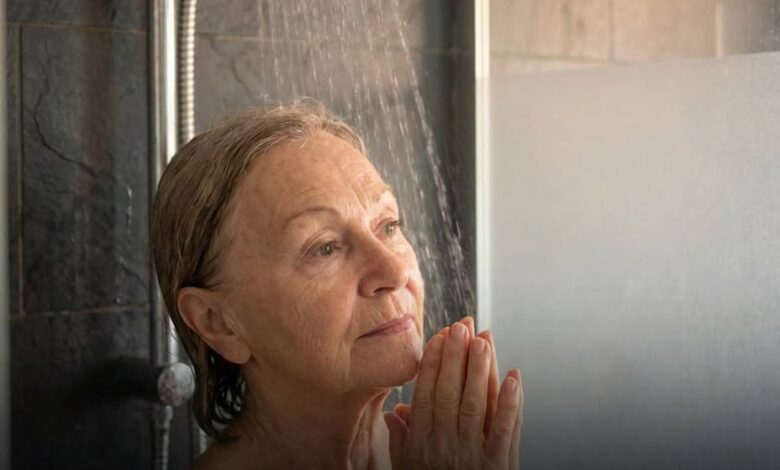
Many adults over 65 notice that their skin becomes drier, more sensitive, and easier to irritate than it was in earlier years. While it’s common to blame changing weather, aging itself, or even the effectiveness of skincare products, one often-overlooked factor may be hiding in a daily routine: showering habits. What worked perfectly well decades ago may no longer be ideal for aging skin, and small adjustments can make a significant difference in comfort and skin health.
As we grow older, the skin naturally undergoes several changes. It becomes thinner, produces fewer natural oils, and loses some of its ability to retain moisture. The protective barrier that helps keep skin hydrated and resilient gradually weakens over time. As a result, skin becomes more vulnerable to dryness, itching, flaking, and irritation. While these changes are a normal part of aging, certain everyday habits can unintentionally make them worse.
One of the biggest contributors is frequent exposure to hot water. Long, hot showers may feel relaxing, but they can strip away the skin’s already-limited natural oils. Strong soaps, heavily fragranced body washes, and vigorous scrubbing can further weaken the skin’s protective barrier. Over time, these habits can leave skin feeling tight, uncomfortable, and increasingly sensitive.
For many older adults, a gentler approach to bathing can help maintain healthier skin. Many dermatology professionals suggest that full-body showers every other day—or several times per week, depending on lifestyle and activity level—are often sufficient for maintaining cleanliness. On days without a full shower, washing the face, hands, and other essential areas can help maintain freshness while reducing unnecessary moisture loss.
Water temperature also matters. Lukewarm water is generally kinder to the skin than very hot water. Choosing mild, fragrance-free cleansers and limiting shower time can help preserve the skin’s natural protective oils. Another helpful habit is applying a rich moisturizer immediately after bathing while the skin is still slightly damp. This helps lock in moisture and supports the skin’s natural barrier.
Of course, personal preferences and routines vary. Many people enjoy showering daily for relaxation, comfort, or simply because it’s part of their routine. Daily showers are not necessarily harmful, but taking a few precautions can help minimize dryness. Shorter showers, gentler products, and avoiding harsh scrubbing can make a noticeable difference. Instead of rubbing the skin dry with a towel, gently patting it dry can help reduce irritation.
Getting older doesn’t mean sacrificing cleanliness or comfort. It simply means adapting routines to match the changing needs of the body. By making a few thoughtful adjustments, many adults over 65 can continue to enjoy refreshing showers while keeping their skin healthier, softer, and more comfortable throughout the year.