TERROR AT 30,000 FEET: The Heart-Stopping Moment Emirates Flight EK521 Became a Hellish Inferno

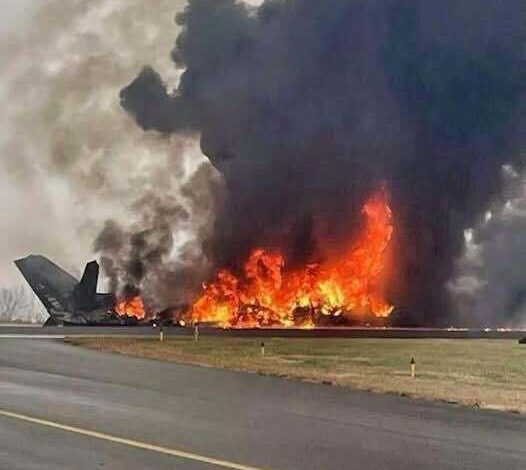
Before the wheels ever touched the runway, no one on board imagined that an ordinary flight to Dubai was only moments away from disaster. Passengers relaxed as the aircraft descended toward one of the busiest airports in the world, expecting to arrive within minutes. Instead, the landing turned into a nightmare. The jet slammed onto the runway, skidded out of control, and erupted into flames, filling the cabin with smoke as terrified travelers fought to escape. What began as a routine journey from India became one of the most dramatic aviation emergencies in the history of Emirates, ending with an extraordinary rescue, a devastating loss, and lessons that continue to influence aviation safety today.
On August 3, 2016, Emirates Flight EK521 departed from Thiruvananthapuram International Airport in Kerala, India, bound for Dubai International Airport. The Boeing 777-300 was carrying 282 passengers and 18 crew members. For most of the flight, everything proceeded normally. The aircraft crossed the Arabian Sea without incident, and passengers prepared for arrival, looking forward to seeing family, attending business meetings, or connecting to other destinations through Dubai’s busy international hub.
As the aircraft neared Dubai during the afternoon, the weather became increasingly challenging. Strong winds and reports of possible wind shear near the runway created difficult conditions for landing. Wind shear, which involves sudden changes in wind speed or direction, is one of the hazards pilots train extensively to handle because it can significantly affect an aircraft during the final moments before touchdown.
The crew continued the approach, but as the aircraft landed, events unfolded rapidly. The Boeing 777 touched down before becoming unstable. It bounced back into the air instead of settling firmly on the runway, leaving the pilots with only seconds to react. When the aircraft came down again, it struck the runway with tremendous force. The landing gear collapsed beneath the massive weight of the jet, causing it to slide across the pavement as sparks and debris scattered behind it.
The aircraft eventually ground to a halt, but the danger was only beginning. Flames erupted beneath the fuselage almost immediately, producing thick clouds of black smoke that rose high above the airport. Airport personnel watched in disbelief as one of the world’s largest passenger aircraft quickly became engulfed in fire.
Inside the cabin, confusion instantly turned into panic. The violent impact threw passengers forward while smoke began entering the aircraft. Flight attendants reacted without hesitation, shouting evacuation commands and directing passengers toward the nearest emergency exits. They repeatedly instructed everyone to leave their luggage behind, knowing that even a few seconds of delay could cost lives.
Emergency slides deployed within moments. Hundreds of frightened passengers poured from the aircraft as cabin crew worked methodically despite the growing fire beneath them. Families carrying children, elderly travelers, tourists, and business passengers scrambled down the slides and ran across the runway while emergency vehicles raced toward the burning aircraft.
Despite the terrifying circumstances, every one of the 300 people on board escaped before the flames fully engulfed much of the aircraft. Aviation experts later praised the speed and discipline of the evacuation, noting that the professionalism of the cabin crew played a crucial role in preventing a far greater tragedy.
Although everyone aboard survived, the accident still claimed a life. Firefighter Jasim Al Baloushi was killed while battling the intense blaze after an explosion occurred during firefighting operations. His death deeply affected the United Arab Emirates and the global aviation community, serving as a powerful reminder that emergency responders routinely place themselves in extraordinary danger to protect others.
Several passengers, crew members, and emergency personnel suffered minor injuries, including smoke inhalation and injuries sustained during the evacuation. Many survivors later described hearing explosions behind them as they ran from the aircraft, only realizing afterward how narrowly they had escaped what could have become a catastrophic loss of life.
The destruction of the aircraft temporarily brought operations at Dubai International Airport to a standstill. Flights were diverted to nearby airports, departures were delayed, and thousands of travelers experienced significant disruptions while emergency crews secured the scene and investigators began their work.
Investigators from the United Arab Emirates, working alongside specialists from Boeing, engine manufacturers, and international aviation authorities, launched a comprehensive examination of the accident. Both the cockpit voice recorder and flight data recorder were successfully recovered, allowing investigators to reconstruct the final moments of the flight in remarkable detail.
The investigation ultimately concluded that the accident resulted from a combination of circumstances rather than a single mechanical failure. Strong winds and wind shear complicated the landing, but investigators also determined that difficulties during a go-around maneuver contributed significantly to the sequence of events. A go-around is a standard safety procedure in which pilots discontinue a landing attempt and climb away for another approach. During this critical phase, several factors combined within seconds, ultimately leading to the hard landing and collapse of the landing gear. Investigators found no evidence of any structural defect or catastrophic mechanical malfunction that directly caused the accident.
The findings highlighted how even modern aircraft operated by highly experienced crews can encounter situations where multiple variables rapidly combine, leaving little room for error. As a result, aviation authorities introduced recommendations focused on improving pilot training, refining operational procedures, and enhancing aircraft systems designed to assist crews during challenging landing conditions.
One of the most remarkable aspects of the accident remains the survival of everyone on board. Aviation professionals frequently point to Emirates Flight EK521 as a textbook example of how rigorous crew training, effective evacuation procedures, and rapid emergency response can prevent a disaster from becoming far worse. The cabin crew remained composed under unimaginable pressure, guiding hundreds of frightened passengers to safety while smoke and flames spread around the aircraft.
Airport firefighters also demonstrated exceptional courage. Their immediate response helped contain the fire and supported the successful evacuation, even though one firefighter ultimately sacrificed his life during the operation. Jasim Al Baloushi’s bravery remains one of the defining legacies of the accident and continues to be honored as an extraordinary act of public service.
For the survivors, the emotional effects lasted long after the fire was extinguished. Many later spoke openly about struggling with anxiety, recurring memories of the evacuation, and a renewed appreciation for life. Some remained in contact with fellow passengers who had shared those terrifying minutes, while many credited the professionalism and calm leadership of the cabin crew with giving them the opportunity to return home to their families.
The loss of Emirates Flight EK521 also reinforced an important reality about commercial aviation. Although accidents receive worldwide attention because of their dramatic nature, flying remains one of the safest forms of transportation. Every major investigation contributes valuable knowledge that strengthens aircraft design, pilot training, emergency procedures, and international safety regulations, helping make future flights even safer.
Today, Emirates Flight EK521 is remembered not only as a dramatic aviation accident but as a powerful story of survival, professionalism, and sacrifice. Hundreds of lives were saved through disciplined training, decisive action, and extraordinary courage under immense pressure. At the same time, the memory of firefighter Jasim Al Baloushi stands as a lasting reminder that true heroism often comes at great personal cost. While the aircraft itself was destroyed, the lessons learned from that day continue to improve aviation safety worldwide, ensuring that the tragedy serves a lasting purpose for generations of travelers.