In the age of viral content, the line between satire and reality has never been thinner.
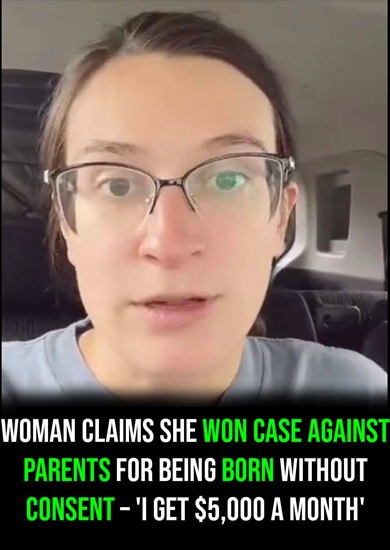
That reality became clear when TikTok creator Kass Theaz sparked widespread debate after posting a video claiming she had taken her parents to court for giving birth to her without her consent. What began as a joke quickly exploded across social media, attracting millions of views and leaving countless viewers wondering whether the story was real.
The answer, of course, was no.
Kass Theaz is known for creating satirical content that exaggerates real-world discussions and internet arguments to expose how absurd certain ideas can sound when taken to their logical extremes. Her videos often blur the boundaries between fact and fiction by presenting outrageous scenarios with complete seriousness.
The “lawsuit against my parents” video became one of her most successful examples.
In the clip, Theaz argued that she never agreed to be born and therefore should not be responsible for the challenges that come with life, such as working, paying bills, or becoming independent. She delivered every line with a straight face, speaking as though she were discussing a legitimate legal case rather than an intentionally ridiculous premise.
That deadpan approach was exactly what made the video so convincing.
Many viewers immediately recognized the satire and joined in on the joke. Others, however, took the claims at face value, expressing disbelief, frustration, or outrage in the comments. The mixture of confusion and humor helped fuel the video’s rapid spread, pushing it far beyond TikTok and onto other social media platforms.
As the discussion grew, so did the misunderstandings.
People reposted clips without context, shared screenshots, and debated the story as though it were a genuine legal dispute. In many cases, viewers encountered the content long after it had been separated from its original satirical setting.
Rather than ending the joke, Theaz leaned into it.
She released additional videos expanding the fictional storyline, humorously claiming that her parents had been ordered to provide financial support because she never agreed to participate in life in the first place. The increasingly absurd updates remained completely straight-faced, making it even harder for some viewers to distinguish comedy from reality.
Eventually, Theaz clarified that the entire scenario was satire.
She explained that her goal was not to promote the argument but to highlight how quickly online conversations can spiral when people react without examining context. Ironically, the confusion surrounding the video ended up proving her point.
The viral success of the content also sparked broader conversations about media literacy in the digital era.
Many observers noted that platforms built around short-form videos can make context difficult to recognize. When clips are shared, reposted, or viewed in isolation, satire can easily be mistaken for fact. The faster information spreads, the easier it becomes for misunderstandings to gain momentum.
Theaz continued building her online presence through similar content, creating fictional scenarios that explored parenting, identity, social trends, and internet culture through exaggerated storytelling. Her signature style remained the same: present something obviously absurd with complete sincerity and allow the audience to decide whether to laugh, argue, or believe it.
Over time, that approach became her trademark.
While many followers now immediately recognize her comedic intent, new viewers continue to discover her videos and occasionally mistake them for genuine opinions or real-life events. That ongoing confusion is part of what keeps her content circulating and generating discussion.
Ultimately, the viral “lawsuit against my parents” story serves as more than just an internet joke.
It highlights the extraordinary power of satire in the digital age, where a fictional scenario can spread around the world in hours and become the subject of serious debate. It also demonstrates how easily context can be lost once content leaves its original platform.
For Kass Theaz, a simple satirical sketch became a cultural talking point.
And for millions of viewers, it became a reminder that not everything online is exactly what it appears to be.