Can One Herb Really Destroy Parasites and Fight Urinary Tract Infections? Here’s What the Science Says

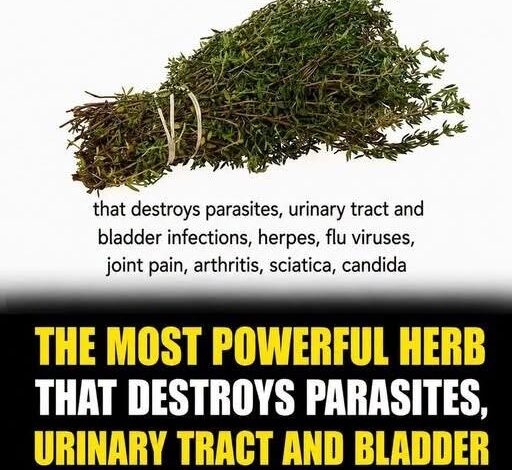
Natural remedies have become increasingly popular, with countless online claims suggesting that ordinary herbs can eliminate infections, kill parasites, and even replace conventional medical treatment.
The truth is more complicated.
Many plants contain biologically active compounds that have been studied for their antimicrobial, antifungal, or anti-inflammatory properties. Some have produced interesting results in laboratory research. But a promising result in a laboratory is not the same as proving that a product can safely and effectively treat an infection in a person.
That distinction is important.
Consider oregano oil. Its main compounds, carvacrol and thymol, have demonstrated antimicrobial activity in laboratory experiments against certain bacteria and fungi. Researchers continue to study their potential, but these findings alone do not prove that oregano oil can reliably treat infections in humans.
The same caution applies to uva ursi, which contains arbutin. The compound can produce substances with antibacterial activity in the urinary tract under certain conditions, and the plant has a long history of traditional use for urinary complaints. However, evidence supporting its use as a standalone treatment for urinary tract infections remains limited, and prolonged or inappropriate use can carry risks.
Other plants and essential oils have also shown antimicrobial effects in laboratory studies, including:
- Tea tree oil
- Garlic
- Clove
- Thyme
- Cinnamon
But the human body is far more complicated than a laboratory dish.
A substance that inhibits bacteria in a controlled experiment may not reach an infected area at an effective concentration once it enters the body. It may be broken down quickly, absorbed poorly, or cause side effects before reaching a potentially useful dose.
And “natural” does not automatically mean safe.
Concentrated herbal products can cause digestive irritation, allergic reactions, or other adverse effects. Some may affect the liver or kidneys, while others can interact with prescription medications. Certain supplements may interfere with blood thinners, diabetes medications, blood-pressure drugs, or medicines processed by the liver.
Some products may also be inappropriate during pregnancy, breastfeeding, or childhood.
For that reason, anyone taking prescription medication or managing an ongoing health condition should discuss herbal supplements with a qualified healthcare professional before using them regularly.
One of the biggest concerns is not necessarily the herb itself, but what happens when it replaces proper medical evaluation.
A urinary infection may appear to improve temporarily while the underlying infection continues to spread.
Persistent diarrhea blamed on parasites could actually have another cause.
Abdominal discomfort dismissed as a reaction to “toxins” or the need for a detox could instead be a symptom of a condition requiring medical attention.
Without an accurate diagnosis, treatment can be delayed.
That does not mean herbal medicine has no value.
Plants remain an important area of scientific research, and some plant-derived compounds may eventually contribute to new treatments. In fact, modern medicine has already benefited from numerous medications that originated from substances found in plants.
The important question is not whether something comes from nature.
It is whether it has been demonstrated to be safe and effective for the specific condition being treated.
Herbal products may sometimes be useful as complementary approaches or for minor symptoms, depending on the individual and the product. But supportive is not the same as curative, and complementary therapies should not automatically be treated as alternatives to proven medical care.
When symptoms suggest a potentially serious infection—such as persistent fever, painful urination, severe abdominal pain, bloody diarrhea, unexplained weight loss, or digestive symptoms that do not improve—medical evaluation is the safest option. Testing can help determine the actual cause and ensure that appropriate treatment begins before complications develop.
Meanwhile, some of the most effective ways to reduce infection risk remain simple:
- Wash your hands regularly.
- Use safe drinking water.
- Prepare and store food properly.
- Maintain good sanitation.
- Eat a balanced diet.
- Keep recommended vaccinations up to date.
- Seek medical attention when concerning symptoms persist or worsen.
These measures may not be as exciting as claims about miracle cures, but they remain fundamental to protecting health.
Herbs and plant-based compounds deserve continued scientific investigation. Some may eventually provide useful treatments, while others may offer limited supportive benefits when used appropriately.
The smartest approach is not to choose between “natural” remedies and modern medicine.
It is to understand the strengths and limitations of both.
Nature can provide valuable compounds and potential therapeutic discoveries. Modern medicine provides diagnostic testing, clinical evidence, standardized treatments, and the ability to recognize serious conditions that cannot safely be treated with home remedies alone.
When used responsibly and guided by evidence, these approaches can complement one another.
But when health is at stake, reliable evidence should always matter more than the promise of a miracle cure.