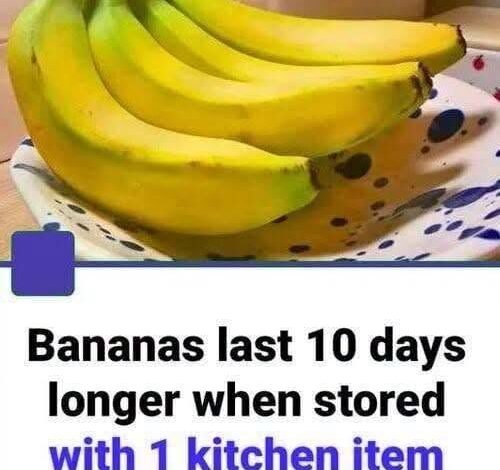
If your bananas seem to go from perfectly yellow to heavily spotted and overripe in what feels like a single day, the issue may have more to do with storage than with the fruit itself.
A few simple changes can slow the ripening process, help bananas stay enjoyable for longer, and reduce the amount of fruit that ends up being thrown away.
One of the biggest factors involved is ethylene gas.
Ethylene is a naturally occurring plant hormone that helps fruits ripen. Bananas produce ethylene themselves, but they also respond to ethylene released by other fruits. When several ethylene-producing fruits are kept together, ripening can happen more quickly.
That is why the location of your bananas matters.
Fruits such as apples, pears, avocados, peaches, and tomatoes release ethylene as they mature. If your bananas are sitting directly beside these fruits in the same bowl, they may begin softening and developing brown spots sooner.
A simple solution is to give your bananas their own space.
Keep them on the countertop, preferably somewhere with good airflow and away from direct sunlight. Separating them from other ripening fruit can help slow the process and keep them firm for longer.
Another commonly used trick involves the banana stems.
Because the stem area plays a role in ethylene release, wrapping the stems with plastic wrap may help slow ripening. Some people wrap the entire bunch at the stem, while others wrap individual stems after separating the bananas.
The effect can vary depending on temperature, banana variety, and how ripe the fruit already is, so it isn’t a guaranteed method. Still, it is inexpensive and easy to try.
Keeping bananas together as a bunch can also be helpful.
Instead of immediately separating each banana, leave the bunch intact until you are ready to eat them. If you prefer, you can also use a banana hanger or another setup that keeps the fruit elevated and allows air to circulate around it.
Temperature is another major factor.
During the normal ripening process, bananas generally do best at room temperature. Putting green bananas in the refrigerator can interfere with normal ripening and may leave the fruit with an undesirable texture.
Once the bananas have reached the ripeness you like, however, refrigeration can be useful.
Cold temperatures slow further ripening, allowing the inside of the banana to remain usable for several additional days.
Don’t be surprised if the peel turns very dark or almost black in the refrigerator.
That discoloration is largely a reaction to the cold temperature and does not necessarily mean the fruit inside has gone bad. The best way to judge the banana is to inspect the flesh for unusual odors, mold, or other signs of spoilage.
Another useful habit is simply paying attention to the ripeness of each banana.
If one banana is becoming much softer than the others, eat that one first. You can also turn an overripe banana into a smoothie, oatmeal topping, banana bread, pancakes, or another baked recipe.
This approach helps prevent perfectly usable fruit from ending up in the trash.
You can also plan your purchases around how quickly you expect to eat them. If you typically eat bananas over an entire week, buying a bunch with slightly different levels of ripeness can make it easier to enjoy them gradually rather than having every banana become ripe at the same time.
In the end, banana storage doesn’t require complicated equipment.
Keep bananas away from other ripening fruits, protect them from excessive heat and direct sunlight, consider wrapping the stems, and use the refrigerator once they’ve reached your preferred level of ripeness.
These small habits can make a noticeable difference.
Instead of watching an entire bunch become overripe at once, you can slow the process, enjoy your bananas at their best, and waste less food.
Sometimes, the simplest way to keep fruit fresh isn’t buying something new.
It’s simply changing where you put it and how you store it.